AI Job Search Tools: Do They Actually Work or Waste Your Time?
Quick verdict
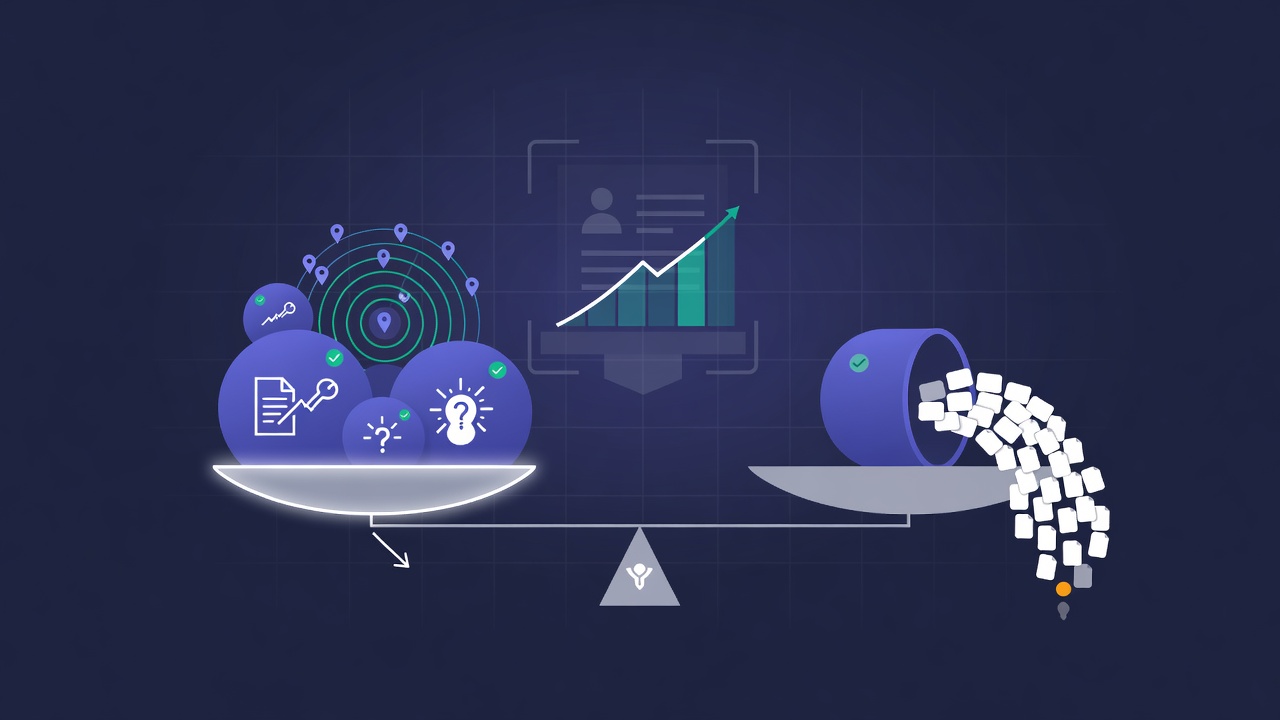
Some AI job tools genuinely help. Some just make you feel productive while your callback rate stays flat. The split is not really "AI good" or "AI bad." It tracks one line: tools that make each application better tend to work, and tools that only make you apply faster tend to waste your time. Sort every tool by that question and most of the confusion clears up.
What actually works
The winners have something in common. They improve the quality or the targeting of your applications instead of just multiplying them.
- Resume tailoring against a specific job. This is the highest-value use. Nearly every application passes through an applicant tracking system first, and Jobscan found a detectable ATS at 97.8% of Fortune 500 companies, with 76.4% of recruiters ranking candidates by the skills in the posting. Having AI rewrite your resume to match that specific posting's language is not gaming the system, it is speaking its vocabulary so a human actually sees you.
- Job matching and discovery. Tools that read your background and surface roles you would not have found beat scrolling a job board by hand. The time saved here is real, and the applications still get your attention one by one.
- Interview prep. Feeding a model the job description and your resume to generate likely questions, then rehearsing answers, is genuinely useful and costs nothing but time. This is where AI quietly earns its keep.
- Cover letter drafting, with editing. A solid first draft grounded in the actual job, then loaded with your specifics, saves the blank-page struggle. The editing is the part that makes it work.
What wastes your time
The losers share a pattern too. They optimize for volume, and volume is not the thing that gets you hired.
Mass auto-apply is the headline offender. A bot firing off around 500 applications and producing one callback is a common story, because the same untailored resume sprayed at everything is exactly what reviewers have learned to ignore. You get a big number and almost no interviews. Worse, applying at inhuman speed can get your LinkedIn account throttled or soft-banned, which shrinks your visibility going forward.
The receiving end has already noticed. A Robert Half survey of more than 2,000 hiring managers found 67% said AI-generated applications had slowed their hiring, and 65% said the surge made it harder to verify whether a candidate's skills were real. When employers are actively bracing against a flood of identical AI applications, adding to the flood is not a strategy. LinkedIn now sees roughly 11,000 applications a minute, up 45% in a year, so the pile you are spraying into keeps getting deeper.
The honest math
Here is the trade in one line: ten tailored applications usually beat hundreds of sprayed ones, and it is not close. That flips the intuition behind most auto-apply pitches. The tool that helps you send 500 applications a day is selling you the metric that does not matter. The tool that helps you send 10 genuinely strong ones is selling the one that does.
None of this means AI job tools are a scam. It means they are only as good as what you point them at. Aim them at quality and targeting, and they compound your effort. Aim them at raw volume, and they mostly generate activity you can mistake for progress.
How to use them without wasting time
A workable system is boring on purpose:
- Use autofill to kill the repetitive typing, not to remove yourself from the loop.
- Tailor the resume and cover letter to each job you actually want, using the posting's own language.
- Rehearse interviews with AI using the real job description.
- Skip the tools whose only promise is a bigger application count.
You also do not need a separate paid subscription for each of these. Resume tailoring, cover letters, and interview prep are all just prompting good models, and different models are better at different pieces. One account that reaches several models handles the whole workflow, which is the practical case for using multiple AI models from one app instead of buying a stack of narrow job tools. If you are already paying for a few AI subscriptions, it is worth checking whether you are overpaying across overlapping plans first.
Video: AI job search tools that actually work
A rundown of job-search tools worth your time, from someone who tested a pile of them.
FAQ
Are AI job search tools worth paying for?
The ones that improve tailoring, matching, or interview prep can be. The ones whose main selling point is applying to hundreds of jobs automatically usually are not, because mass untargeted applying produces poor callback rates.
Do AI resume tools actually help you get past the ATS?
Tailoring your resume to a posting's skills and language genuinely helps, since recruiters rank by skill match. Just remember the ATS mostly sorts and ranks, it does not auto-reject on writing style.
What is the single best use of AI in a job search?
Tailoring each application to the specific job, plus interview prep. Both raise your quality per application, which is the number that actually correlates with getting hired.
Sources
- Jobscan - 2025 ATS usage: 97.8% of Fortune 500 use an ATS; 76.4% of recruiters rank by skills
- Hiration - the 500-to-1 callback reality, LinkedIn's 11,000 applications/minute, and the Robert Half survey
- SelectSoftwareReviews - applicant tracking system statistics
Further reading
Try all the models mentioned in this article
Admix gives you GPT-5, Claude, Gemini, and 350+ AI models in one app. Compare responses side by side. Free to start.
Start free on Admix