People Are Making Videos With Opus 5.5 by Writing Code, Not Prompting a Diffusion Model
Quick verdict
Over the past week a string of Claude Code projects showed Opus 5.5 writing the code that renders a video, instead of a diffusion model painting the frames. People are getting 30 to 60 second hand-drawn animations, a full SNES-style fight scene, and a playable browser island out of single autonomous runs. The output quality is the surprise, but the real story for anyone paying by the token is the spread in cost: one animation ran about $4, and an 8-hour interactive demo burned close to $1,900. The technique is genuinely new, and the bill is the part to plan around.
What actually shipped
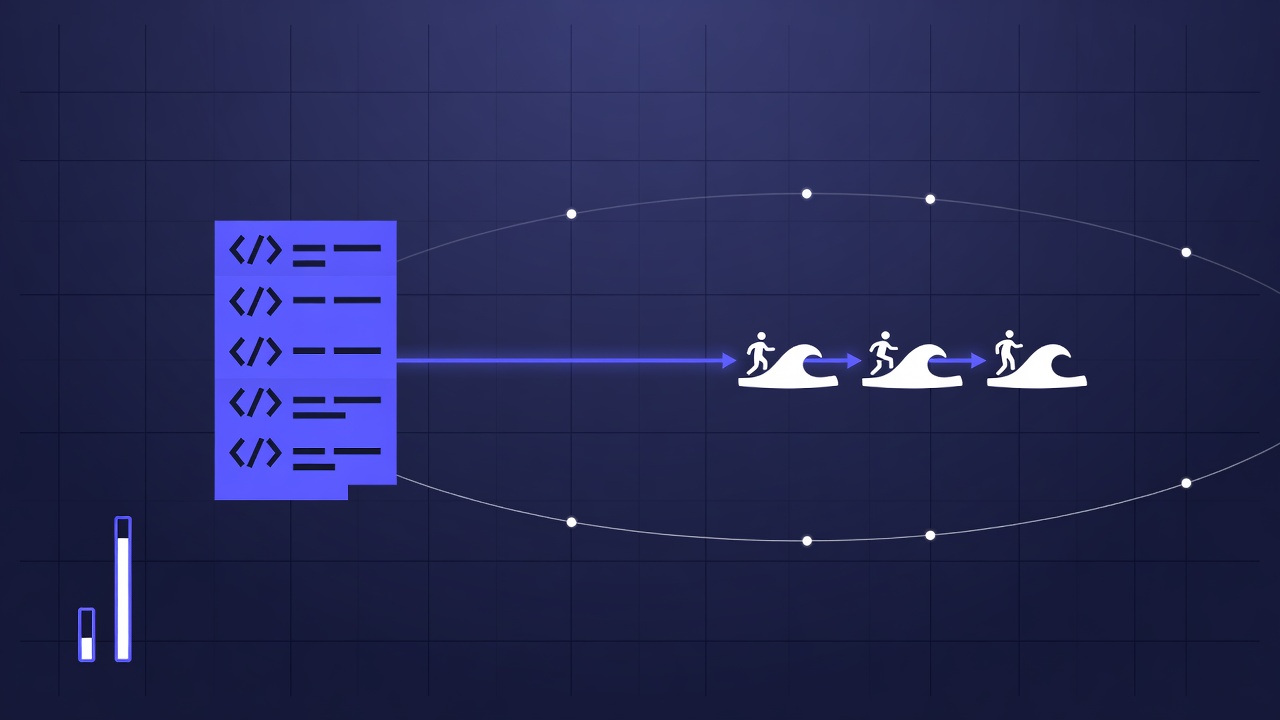
These are not diffusion clips. The pattern is to give Claude Code an Opus 5.5 session and let it write the script, the assets, the animation, and the audio as code, usually pure JavaScript on a canvas, then render that to a video file. A few runs that circulated:
- A one-shot hand-drawn collage animation on "what is the purpose of life," made autonomously in about 1 hour 20 minutes. It cost roughly $20 of Opus usage plus $3.21 on an OpenRouter key spread across eight APIs, mostly an image model and text-to-speech.
- A follow-up where someone ran the same prompt on their own product and got a full explainer video, self-review pass included, for about $4.
- A SNES-style combat video built entirely from code, with character art, animation timing, fight sequencing, and music, none of it supplied by the user.
- TideWater, a browser-based interactive island with birds, crabs, fish, wind, night lighting, and a sailable boat, built in about 8 hours through plain "add X" and "make it better" prompts. It used about $1,874 in tokens, roughly 59% of a Max 20x weekly allowance.
The issue that surfaced all of this framed it as coding models becoming media engines. Opus 5.5 and OpenAI's GPT-6 Astra are the two models people keep reaching for, with a p5.brush 4K short, Blender claymation, and a 400-plus-hour Astra 3D scene among the examples.
Why "no diffusion" is the interesting part
Text-to-video tools generate pixels. This approach generates a program that draws the pixels, so the model controls timing, layout, and motion the way a developer would. That is why watchers kept singling out pacing and timing rather than visual polish: one popular comment on the fight-scene clip said its "sense of timing and pacing is actually good," which is exactly what frame-by-frame diffusion tends to miss. It also means the output is editable. A JavaScript animation is a file you can open and change, not a fixed render you have to regenerate from scratch.
The reaction it triggered was a "who knew you didn't need diffusion" take making the rounds. That overstates it, since these are stylized animations and simulations, not photoreal footage. But for explainers, motion graphics, and game-style scenes, a model that can code the renderer is a real alternative to a model that hallucinates frames.
The cost is the catch
The token math is where this gets serious for anyone doing it more than once. The projects that made the rounds span two orders of magnitude, and the difference is mostly how long you let the agent iterate.
| Project | Time | Approx. token cost |
|---|---|---|
| Explainer video (replicated run) | ~1.5-2 hours | ~$4 |
| Collage animation (one-shot) | ~1h20m | ~$20 Opus + $3.21 OpenRouter |
| TideWater interactive island | ~8 hours | ~$1,874 |
A tight, well-scoped one-shot is cheap. An open-ended "keep making it better" session on the most expensive model is not, and $1,874 for one demo is the kind of number that ends a hobby project fast. If you are going to work this way regularly, the cost control is the same one that applies to any heavy coding-agent use: cap spend, scope the task, and route work to the cheapest model that clears the bar rather than defaulting to the priciest one. That routing math is the whole point of an AI aggregator, and it is why keeping coding-agent costs down with model routing matters more as these runs get longer.
Why it matters
For creators and marketers, this opens a workflow that did not exist a month ago: describe a short video, get back editable code that renders it, and iterate in a normal chat loop. It competes less with Hollywood and more with template-based explainer tools and stock motion graphics. For developers, the same runs double as evidence of how far one-shot agentic coding has come, since a playable island with basic game-loop mechanics from "add X" prompts is a coding result as much as a media one. The honest caveat is cost and consistency. These are impressive one-offs shared because they worked, and the failures and re-rolls do not trend. Treat the token bill as the real budget line, and this is a useful new tool rather than a party trick. For how the harness around the model shapes results like these, our take on why the best AI coding agents win on scaffolding is the relevant background.
Video: Opus 5.5 makes a cartoon from scratch
A walk-through of handing Opus 5.5 a blank slate and getting an animated cartoon back, which shows the code-as-renderer loop in practice better than any still frame can.
FAQ
Is Opus 5.5 actually generating the video, or a diffusion model?
Neither in the usual sense. Opus 5.5 writes code, typically JavaScript on a canvas, that draws and animates the scene, and that program renders the video. Some runs still call a separate image model or text-to-speech for assets, but the animation itself is coded, not diffused.
How much does one of these videos cost?
It depends entirely on scope. A tight one-shot explainer ran about $4, a collage animation was roughly $20 plus a few dollars of API calls, and an 8-hour open-ended interactive demo hit about $1,874 in tokens. The longer you let the agent iterate on the priciest model, the faster it climbs.
Can I do this without paying a fortune?
Scope the task tightly, cap your API spend, and do not leave an open-ended session running on the most expensive model. Routing to a cheaper model when it can handle the step is the main lever, which is what we cover in our guide to cutting AI coding-agent costs.
Is this better than tools like Sora or Veo?
For photoreal footage, no. For stylized explainers, motion graphics, and game-style scenes, code-rendered animation gives you tighter control over timing and an output you can edit afterward. They solve different problems.
Sources
- r/ClaudeAI - "Made entirely with Opus 5.5 + $3.21 of OpenRouter API usage"
- r/ClaudeAI - "Jaw literally dropped" replication for about $4
- r/singularity - "Opus 5.5 is insane at making videos" (SNES-style fight)
- r/singularity - TideWater interactive island in 8 hours
- @dangreenheck - TideWater build and token cost
- @pbshgthm - p5.brush 4K "time" film rendered from code
- @angrypenguinPNG - Blender claymation from code
- @M1Astra - 400-plus-hour Astra 3D scene
- @sirbayes - "who knew you didn't need diffusion"
- @IterIntellectus - Claude-generated video on Western civilization (30.6K)
Further reading
Try all the models mentioned in this article
Admix gives you GPT-5, Claude, Gemini, and 350+ AI models in one app. Compare responses side by side. Free to start.
Start free on Admix