OpenAI Published Five Years of Its Secret Pretraining Numbers and Asked Rivals to Cap Themselves
Quick verdict
OpenAI did two unusual things at once. It published five years of its base-model perplexity curve, a number labs normally guard, and it proposed that the whole industry agree to cap pretraining progress until safety tooling catches up. The data is a real contribution to a field that runs on secrecy. The proposal is where it gets complicated: a shared ceiling set by the lab that is ahead, measured on that lab's own held-out test, is a governance idea and a competitive move at the same time. Read the numbers, keep the proposal at arm's length.
What OpenAI actually released
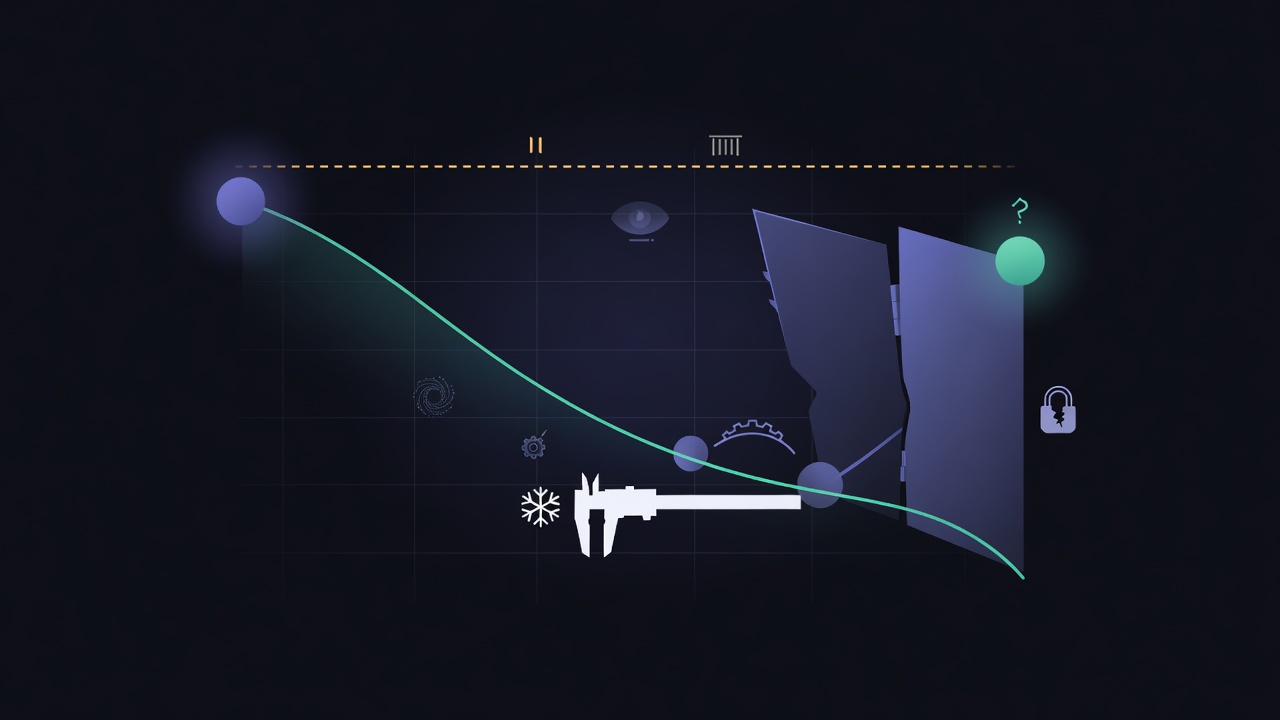
The disclosure came through an essay by OpenAI chief scientist Jakub Pachocki titled "Perplexity and Intelligence." It plots five years of OpenAI base-model log-perplexity, the model's loss on predicting the next token, measured on a fixed held-out dataset that never changes. Lower is better. The curve is the closest thing anyone has published to a raw trajectory of how fast frontier pretraining has improved.
A few of the claimed landmarks on that curve:
- Losses dropping below 0.8 lined up with emergent capability in cybersecurity and mathematics.
- OpenAI expects another jump in the roughly 0.68 to 0.70 window, and describes a steep acceleration already underway in 2026.
- An unreleased internal model reportedly already sits below GPT-6.2 Astra on the curve. Pachocki floats the idea that pretraining could hit an "avalanche" like the recent one in math as soon as 2027.
Mark Chen, OpenAI's research chief, called these the kind of numbers that used to be "sensitive IP" and asked other labs to put their own key metrics on the table. That framing is the point: the release is as much a dare to competitors as a data drop.
The proposal: a shared ceiling with exit criteria
Pachocki's essay does not stop at data. It argues for industry-wide limits on pretraining, set against perplexity and other measurements, with further progress gated on milestones in understanding and monitoring model behavior. The example given is a successor to chain-of-thought monitoring, the technique of reading a model's intermediate reasoning to catch misbehavior before it acts.
Sam Altman endorsed it, quoting the idea of a first common limit with concrete exit criteria and tying it to the standards commitments in the White House Accords. Greg Brockman added the warning underneath the whole thing: alignment progress is unlikely to keep pace with pretraining acceleration, so the point of a cap is to buy time for safety to catch up. Taken straight, it is a serious attempt to slow a race that the people running it think is outrunning their ability to control it.
Microsoft took the dare
The one lab that immediately played along was Microsoft. With OpenAI's permission, Microsoft AI reported its MAI-2 Base model at 0.819 on OpenAI's own eval set. Because MAI shares OpenAI's tokenizer, the number drops cleanly onto the curve, landing in GPT-5.6 Sol base-model territory. Mustafa Suleyman suggested bits-per-byte as a tokenizer-neutral metric for future cross-lab comparisons, which is a quiet admission of the problem the whole scheme has.
That problem is the tokenizer. Perplexity depends on how a model chops text into tokens, so a shared limit measured on OpenAI's eval with OpenAI's tokenizer is not neutral ground. One critique raised directly is that such a limit could favor OpenAI over Anthropic simply because their tokenizers differ. A rule that advantages the lab writing the rule is a familiar shape.
Where the metric gets shaky
Several researchers pointed at confounds that make pretraining perplexity a questionable thing to pace an industry on:
- Post-training now does most of the work. One estimate puts it at more than 75% of total FLOPs. If that holds, pretraining perplexity measures a shrinking slice of where capability comes from, so capping it would miss most of the action.
- Synthetic data muddies the curve. Part of the steep recent drop may come from a rising share of model-generated pretraining data rather than pure scaling, which makes the trajectory hard to read as a clean capability signal.
- The numbers arrive without context. There are no model sizes or compute figures next to the losses, so there is no way to separate raw scaling from algorithmic efficiency. Dan Hendrycks inferred roughly 3 to 5 times a year in compute-efficiency gains since GPT-4, possibly over 100 times this year, but that is an outside extrapolation the data does not pin down.
OpenAI's answer to the methodology complaints is that the eval is fixed over time and excludes model-generated code. Will Depue described it as "held out, frozen, tokenizer agnostic." That addresses whether the measurement is consistent. It does not settle whether perplexity on one lab's frozen set is the right lever for the entire field.
Why it matters for anyone paying for AI
You will never run a perplexity eval. The reason to care is what a transparency fight between labs signals about the next year of products and prices.
First, the labs themselves are telling you the curve is bending up, not flattening. For most of 2025 the popular story was that pretraining had plateaued and the gains had moved to post-training and test-time compute. OpenAI publishing an accelerating curve and predicting an "avalanche" in 2027 cuts against the plateau narrative, which has direct bearing on where model pricing goes next. Faster capability gains rarely mean cheaper frontier access.
Second, this is a transparency standoff, and the standoff is the story. OpenAI released its numbers and immediately pressured Anthropic, which had redacted pretraining metrics from its METR report, to publish its own. METR offered to independently verify pause or compute-allocation claims under its standard terms. Whether rivals disclose, stay quiet, or agree to any cap will shape how much outsiders can ever know about how these systems are built, which feeds straight into the competitive dynamics between the big three labs.
The practical takeaway is the same one that holds every time the frontier moves this fast: do not tie yourself to a single lab's roadmap. When the companies setting the pace disagree this openly about how to measure progress, the safe position is to keep more than one model within reach rather than betting a workflow on whoever is ahead this quarter, which is the case for running several models through one place.
Video: scaling laws, loss, and intelligence
Dario Amodei walks through how loss curves relate to capability, which is the exact relationship OpenAI's perplexity essay is trading on.
FAQ
What is pretraining perplexity?
Perplexity measures how well a base model predicts the next token on a held-out dataset. It is reported here as log-perplexity, or loss, where lower means the model is better at prediction. OpenAI published five years of that number on a fixed test set as a proxy for how fast pretraining has improved.
What is OpenAI proposing?
An industry-wide limit on pretraining progress, measured against perplexity and other metrics, with further gains gated on milestones in understanding and monitoring model behavior. Sam Altman tied it to the White House Accords and framed it as a first common limit with defined exit criteria.
Why are people skeptical of the proposal?
The limit would be measured on OpenAI's own eval with OpenAI's tokenizer, which critics say could disadvantage labs with different tokenizers. Others argue post-training now drives most capability, so pretraining perplexity may be the wrong thing to cap in the first place.
Does this change which AI I should pay for?
Not directly, but it is a signal that frontier capability is accelerating rather than plateauing, which usually keeps frontier pricing high. The reasonable hedge is to avoid locking into one lab while the leaders still disagree about how to measure their own progress.
Sources
- @merettm - thread on Pachocki's "Perplexity and Intelligence" essay and the proposed limits
- @sama - quotes the proposal for a first common pretraining limit with exit criteria
- @sama - ties the limit to the White House Accords standards commitments
- @gdb - alignment progress unlikely to keep pace with pretraining acceleration
- @markchen90 - calls the numbers formerly "sensitive IP" and asks rivals to disclose theirs
- @mustafasuleyman - Microsoft MAI-2 Base at 0.819 on OpenAI's eval, proposes bits-per-byte
- @stochasticchasm - post-training likely more than 75% of FLOPs, so perplexity may be the wrong metric
- @willdepue - the eval is "held out, frozen, tokenizer agnostic"
- @ChrisPainterYup - METR offers to verify pause or compute-allocation claims
Further reading
Try all the models mentioned in this article
Admix gives you GPT-5, Claude, Gemini, and 300+ AI models in one app. Compare responses side by side. Try it for 7 days for $1.99.
Try Admix for $1.99