GPT-6.2 Astra Is OpenAI's #2 Model and Far Cheaper Per Task, But Testers Are Split
Quick verdict
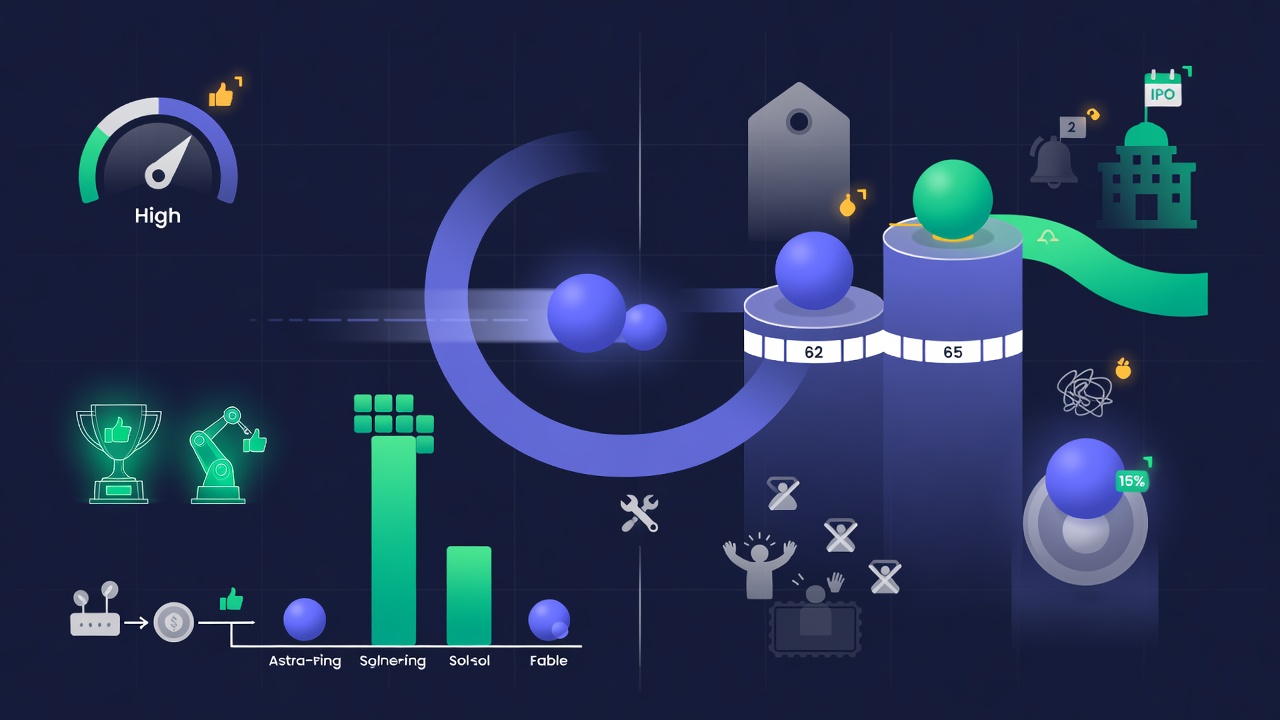
OpenAI released GPT-6.2 Astra and GPT-6.2 Sol two days before Anthropic's expected first day of public trading. The models do not take the intelligence crown back from Anthropic, but they land in a place that matters more for most budgets. Artificial Analysis puts the new Astra at 62 on its Intelligence Index, second only to Fable 5.2 at 65, while Sol matches September's Astra for roughly 15% of the cost per task. So Anthropic still owns the single best model, and OpenAI now owns the most intelligence per dollar. The catch is the reviews. Benchmarks say this is a strong, efficient generation, but hands-on testers range from impressed to calling it unusable, and the rough edges are real enough that the usual "trust the leaderboard" shortcut does not fully work here.
What actually shipped
Two models dropped together, aimed at different jobs. Astra is the frontier model and Sol is the cheaper workhorse that most people will actually run day to day.
- Astra API pricing: $8 per million input tokens, $0.40 cached input, $40 output. Both models carry a 1M-token context window and a 128K output limit.
- Sol keeps its predecessor's pricing: $2 input, $0.10 cached, $10 output. That is the model OpenAI expects to be the main workhorse.
- Both roll out to ChatGPT Work and Codex for Plus, Pro, Enterprise, and Edu, and to developers through the API as
gpt-6.2-astraandgpt-6.2-sol. - The Enterprise build of Astra adds a legal search index. Artificial Analysis measured it at 20.8% on the Harvey LAB-AA law benchmark, against 15.0% for base Astra.
The headline number, that the models are "20% to 600% cheaper," is a range across tasks, not a single discount. On OpenAI's own Agents' Last Exam 1.1 run, Astra at its highest effort setting gained 5.2 points over GPT-6 Astra at max while using under a third of the cost per task, and OpenAI claims a 5.5-point lead over Fable 5.2 at about 5% of the cost on that test. On GDPval v2 it reports Astra using 22% fewer output tokens than the model it replaces. Those are vendor figures, so treat the exact deltas as a sales pitch, but the direction lines up with what the independent labs found.
One safety note worth flagging: OpenAI rated Astra High for AI Self-Improvement on its Preparedness Framework, a first for a model it has released externally. On a separate measure, Vals' RSI-Index rose from 27.07% to 29.01%, where 50% marks the human reference point. On the research-math side, Epoch verified seven Lean solutions out of 68 FrontierMath Erdős problems, up from a previous best of three.
Where it lands against Fable 5.2 and the old Astra
The independent benchmarks are the part worth reading closely, because this is where the "intelligence per dollar" story holds up. Artificial Analysis ran the new models through its full suite and across several specialized evals.
| Benchmark | GPT-6.2 Astra | Fable 5.2 | GPT-6.2 Sol |
|---|---|---|---|
| Intelligence Index | 62 (#2) | 65 (#1) | ties Sept Astra at ~15% cost |
| Mercor OpenWorldEngineer | 67.2% | 54.6% | (GPT-6 Astra: 44.2%) |
| AA-3D (3D generation) | 1,318 | 1,271 | 1,259 |
| Robotics preview | 79 | 75 | 78 |
Read that table and the pattern is consistent. Astra beats Fable 5.2 on the long engineering runs, 3D, and robotics previews, yet sits a few points behind it on the headline intelligence score. On Vals' multi-turn Vibe Code Bench, Astra placed first and Sol third. On Perplexity's WANDR research-agent eval, Astra scored 0.783 at about $12.54 per task while Sol reached 0.746 at about $2.65, which is the efficiency argument in a single line: Sol gives up a few points for a roughly fivefold cut in cost. If you care about cross-lab context rather than one vendor's slide, our OpenAI vs Anthropic vs Google breakdown tracks exactly this kind of trade-off over time.
The part the benchmarks miss: testers can't agree
What makes this launch unusual is not the numbers, it is the spread of reactions from people who actually used the models. Matt Shumer tested Astra for weeks and called the models "essentially unusable," saying his Opus and Fable agents rejected much of Astra's subagent output. Ethan Mollick flagged reinforcement-learning artefacts in Astra's behavior that he found genuinely strange. Pietro Schirano, by contrast, blamed many of his early problems on the agent harness rather than the model, and Arena's Peter Gostev pitted Astra against Fable on visual coding and singled out Astra's SVG peacock as a standout.
Some of this is the normal influencer swing between "greatest model ever" and "worst model ever," and the two-week-test videos are already piling up. But the disagreement is wide enough to be a real signal. Benchmarks reward a model for getting the right answer; they say much less about whether it is pleasant to drive through a coding agent, and the Astra complaints cluster on exactly that: subagent coordination, harness sensitivity, and odd behavioral tics. Gabriel Chua still built a walkable Singapore scene using more than 100 Codex threads on it, so the capability is there when the wiring cooperates.
What it means if you pay for AI
Strip away the drama and the lesson is the familiar one. The cost of a given unit of intelligence keeps falling, and Sol matching a two-month-old frontier model at 15% of the price is the clearest proof this month. But that saving only reaches you if you can route each task to the model that clears the bar for the lowest price, instead of committing to one lab and one subscription tier.
Right now that means Sol for a lot of coding and agent work, Fable 5.2 or Astra on the hardest problems where the extra points earn their cost, and a cheaper open model for the easy jobs. The mixed Astra reviews reinforce the point rather than undercutting it: when a model's quality depends this much on the harness and the task, you want to be able to A/B it against alternatives without juggling a wall of separate logins and bills. That flexibility is the whole case for an AI aggregator, and it is why we keep writing about how to stop overpaying for AI subscriptions. The winner of the week is not Astra or Fable, it is whoever gets to pick between them per task.
Video: two weeks with GPT-6.2 Astra
For a hands-on take rather than a benchmark table, here is a two-week test of Astra that gets into where it shines and where it trips.
FAQ
How much does GPT-6.2 Astra cost?
Astra is $8 per million input tokens, $0.40 cached input, and $40 output, with a 1M-token context window and a 128K output limit. Sol is much cheaper at $2 input, $0.10 cached, and $10 output. Artificial Analysis found Sol matches September's GPT-6 Astra at roughly 15% of the cost per task.
Is GPT-6.2 Astra better than Claude Fable 5.2?
It depends on the test. Artificial Analysis ranks Fable 5.2 first on its Intelligence Index at 65 with Astra second at 62, but Astra beats Fable on the Mercor OpenWorldEngineer long-run benchmark, on AA-3D, and on the robotics preview. For a broader side-by-side, see our OpenAI vs Anthropic vs Google comparison.
Why are the reviews so mixed?
Benchmarks and hands-on use are diverging. Some testers, like Matt Shumer, called Astra essentially unusable in agent workflows, while others blamed the harness rather than the model. The complaints cluster on subagent coordination and odd behavior, which leaderboard scores do not capture.
Should I use Astra or Sol?
Sol is the intended workhorse: it gives up a few benchmark points for roughly a fifth of Astra's cost, so it fits most coding and agent tasks. Reserve Astra, or Fable 5.2, for the hardest problems where the extra capability pays for itself. The cheapest-model-that-clears-the-bar approach saves the most money here.
Sources
- OpenAI - introducing GPT-6.2 Astra and Sol
- Artificial Analysis - OpenAI has the #2 model in the Intelligence Index
- Vals - GPT-6.2 Astra and Sol API pricing and context limits
- OpenAI Devs - pricing and rollout details
- Artificial Analysis - Astra for Law on the Harvey LAB-AA benchmark
- Epoch AI - seven verified FrontierMath Erdos solutions in Lean
- Vals - Astra first, Sol third on multi-turn Vibe Code Bench
- Perplexity - Astra and Sol on the WANDR research-agent eval
- Matt Shumer - calling the models essentially unusable after weeks of testing
- Ethan Mollick - on Astra's strange RL artefacts
- Gabriel Chua - a walkable Singapore built with 100+ Codex threads
Further reading
Try all the models mentioned in this article
Admix gives you GPT-5, Claude, Gemini, and 300+ AI models in one app. Compare responses side by side. Try it for 7 days for $1.99.
Try Admix for $1.99