Anthropic's Claude Tag Puts an AI Teammate Inside Slack, and It Already Writes 65% of the Code
Quick verdict
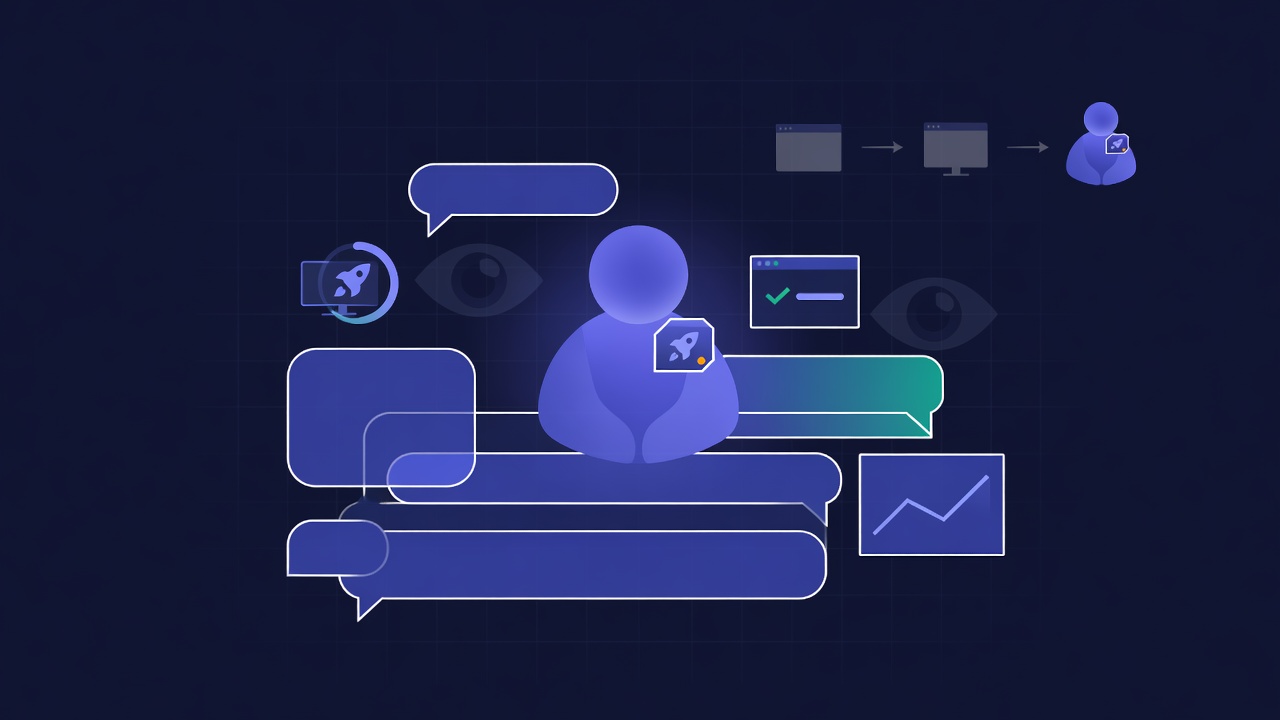
Anthropic shipped Claude Tag, a version of Claude that lives inside Slack as a scoped team member instead of a chat window you open and close. It watches channels, monitors launches and metrics, and runs tasks in the background without being asked each time. Anthropic says the internal build already writes 65% of its product team's code, including much of Claude Tag itself. The product is small. The shift behind it is not.
What actually shipped
Claude Tag joins a Slack workspace the way a coworker would. You give it scoped access to specific channels and tools, then mention it to hand off work. The difference from a normal bot is that it does not wait to be prompted. Anthropic's examples are background watchers, launch and metric monitoring, and proactive task execution inside workflows your team already runs.
The number that got attention was the internal one. Anthropic says its own product team now has Claude writing about 65% of its code, and that a chunk of what built Claude Tag was written by an earlier version of Claude Tag. That is a self-referential claim and worth treating as a vendor figure rather than an audited one, but it lines up with what people building on Claude Code have been reporting for months.
| Old model | What Claude Tag changes |
|---|---|
| Open a chat, paste context, get an answer, close it | Agent stays resident in the channel and keeps context across days |
| You trigger every action | Agent watches and acts on triggers you define |
| Broad account access | Scoped channel and tool permissions per agent |
| One conversation at a time | Background work runs while you do other things |
Why Karpathy is calling it a new interface
Andrej Karpathy framed Claude Tag as the third major interface for large language models. The first was the website you visit, like the original ChatGPT box. The second was the desktop app that sits next to your other tools. The third, in his read, is a persistent entity that works inline with a team rather than a tool a single person opens.
That framing matters because it changes the unit of value. A chatbot helps one person finish one task faster. A resident agent changes how a team's work moves through a channel. If that holds, the competition stops being about who has the smartest single response and starts being about who owns the surface where work actually happens, which for most companies is Slack, not a separate app.
The open ecosystem is chasing the same idea
Anthropic is not alone here. The same week, a cluster of open and indie tools converged on the resident-agent pattern. StarAgent uses tmux plus Tailscale and a web dashboard to run many coding-agent sessions across machines while keeping the CLI as the source of truth. Self-Harness proposes agents that mine their own failures, suggest fixes to their harness, and validate the changes with regression tests. Executor announced an open-source MCP gateway for wiring agents to services, with self-hosted options.
OpenAI has been building toward the same place from the other direction with workspace agents that read and write across Slack, Gmail, and Notion. We covered that approach in our guide to OpenAI workspace agents. Different teams, same bet: the hard part left is no longer raw model quality, it is the plumbing that connects a capable model to the place people already do their work.
Video: Claude Tag explained
A short walkthrough of how Claude Tag sits inside Slack and what the scoped-access model looks like in practice.
What it means for your stack and your bill
A resident agent is a different cost shape than a chat subscription. A chatbot meters loosely against how much one person types. An agent that watches channels and acts on its own runs tokens whether or not you are at your desk, which is the same tension solo users already hit when a $20 plan stops covering daily agent work. We dug into that gap in our breakdown of AI subscription costs.
The practical question for most teams is not whether to adopt a resident agent but which one, and whether you want to be locked to one lab's surface. If you are weighing Claude against the coding agents you already run, our guide to the best AI coding agents and our Claude Code vs Cursor vs Codex comparison cover where each one earns its keep.
FAQ
Is Claude Tag the same as Claude Code?
No. Claude Code is the terminal and IDE coding agent you drive from your machine. Claude Tag is a Slack-resident agent with scoped channel access that runs background and monitoring tasks for a whole team. They share the underlying model but live in different places.
Does Claude really write 65% of Anthropic's code?
That is Anthropic's own figure for its product team, so treat it as a vendor claim. It is plausible given how heavily teams already lean on Claude Code, but it has not been independently audited and your mileage will depend on your codebase and review process.
How is this different from a normal Slack bot?
A normal bot responds when you call it. Claude Tag stays resident, keeps context across days, and acts on triggers you define rather than waiting for every prompt. The scoped-permission model also lets you limit which channels and tools it can touch.
Will every lab ship a version of this?
Almost certainly. OpenAI's workspace agents already aim at the same surface, and a wave of open tools like StarAgent and Executor are building the resident-agent layer independently. Expect the fight to move from model quality to which agent owns the channel where your team works.
Sources
- @claudeai - introducing Claude Tag, a new way for teams to work with Claude in Slack
- @ClaudeDevs - scoped channel access and background task examples
- @_catwu - how Claude Tag is used internally at Anthropic
- @karpathy - on persistent agents as the third major LLM interface
- @RhysSullivan - Executor's open-source MCP gateway for agent fleets
Further reading
Try all the models mentioned in this article
Admix gives you GPT-5, Claude, Gemini, and 350+ AI models in one app. Compare responses side by side. Free to start.
Start free on Admix