Xiaomi's MiMo-V2.6 Is the Top Open-Weights Model, and the Reinforcement Learning Run Cost $2.6M
Quick verdict
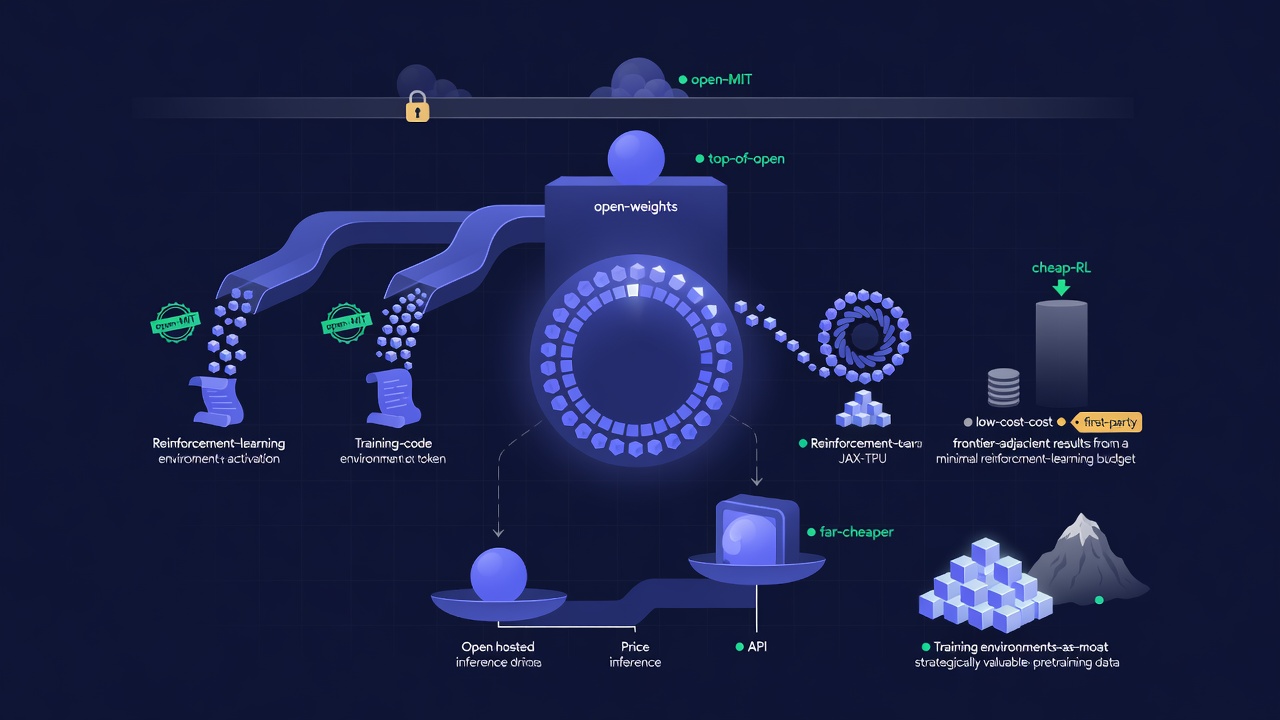
Xiaomi just shipped the best open-weights model anyone has measured, and it did it cheaply enough to make the closed labs nervous. MiMo-V2.6 Pro debuts at the top of Artificial Analysis's open-weights ranking, it is omnimodal, it is MIT licensed, and the reinforcement learning run behind it reportedly cost about $2.6M. For a model in the same conversation as the frontier, that is a rounding error. The interesting part is not the leaderboard spot. It is that Xiaomi is handing out the weights, the training code, and thousands of the reinforcement learning environments it used to get there.
What actually shipped
Xiaomi released two models, MiMo-V2.6 Pro and MiMo-V2.6 Flash, described as open omnimodal models that come with weights, a technical report, the reinforcement learning environments, and training code. Artificial Analysis put Pro at the top of its open-weights table with an Intelligence Index score of 46, the highest for any open model it has tested. The architecture is a mixture of experts, 1.02 trillion total parameters with 42 billion active per token, so it stays cheap to run despite the headline size. Hosted pricing lands at $0.435 per million input tokens and $0.87 per million output, which undercuts most of the closed APIs people compare it to.
| MiMo-V2.6 Pro | Figure |
|---|---|
| Artificial Analysis Intelligence Index | 46 (top open-weights) |
| Parameters | 1.02T total / 42B active |
| Input price | $0.435 / M tokens |
| Output price | $0.87 / M tokens |
| License | MIT |
| Reported RL run | 130 hours, 75B tokens, $2.6M |
The MIT license is the part that changes who can use this. MIT means you can take the weights, fine-tune them, ship them in a product, and not ask anyone's permission. A lot of "open" model releases come wrapped in custom licenses with usage carve-outs. This one does not.
Why the $2.6M number matters
The cost figures are what set the timeline talk off. One widely shared breakdown cites 130 hours, 75 billion tokens, and $2.6M for the reinforcement learning run that produced the result. Another engineer noted the MiMo family scales that reinforcement learning on JAX and TPUs, where going bigger is "mostly a config change, not a code rewrite." If those numbers hold up, post-training is turning into a far cheaper path to frontier-adjacent quality than most people assumed, and that changes the math for anyone who thought catching up required a nine-figure pretraining budget.
There is a second thing worth watching. Xiaomi's team said it wants to release roughly 7,000 reinforcement learning environments, generated from open code repositories with agents in the loop to keep the tasks robust and hard to game. Several researchers, including Thomas Wolf of Hugging Face, made the same point in different words: high-quality open reinforcement learning environments may now be as strategically valuable as the big pretraining corpora were in the last cycle. The moat is moving from who has the data to who has the environments, and Xiaomi is giving its away.
Video: MiMo-V2.6 explained
A rundown of what Xiaomi shipped and why the open-weights community is paying attention.
What it means if you pay for AI
You are not going to download a trillion-parameter model and run it on your laptop. That is not the point. The point is that a model this capable, priced this low through hosted inference, drags the whole market down with it. When the best open-weights option costs well under a dollar per million output tokens, the closed labs have less room to charge a premium for anything short of their very top models. That pressure is exactly what has been pulling API prices down all year, and MiMo-V2.6 adds to it.
For most people the practical move is not to self-host but to make sure you can reach whatever model wins on price and quality this month without being locked into one vendor's bill. That is the case for running several models through a single service and routing each task to the cheapest option that clears the bar, instead of paying a flat premium for one provider. We walked through that approach in our guide to the best AI aggregator, and the underlying trend in why AI prices keep falling.
FAQ
Is MiMo-V2.6 free to use?
The weights are released under an MIT license, so you can download, fine-tune, and deploy them without paying Xiaomi or asking permission. Running the model still costs money in compute, whether you self-host or use a hosted provider, where it is priced around $0.435 per million input tokens and $0.87 per million output.
Is MiMo-V2.6 actually better than closed models like GPT or Claude?
It leads the open-weights category on Artificial Analysis's Intelligence Index at a score of 46, which is the best any open model has posted there. The very top closed models still score higher on that index, so the honest framing is that MiMo-V2.6 is the best you can get with open weights, not the best overall. For a lot of real work that gap does not matter.
Why does the $2.6M reinforcement learning cost matter?
Because it suggests frontier-adjacent quality no longer requires a massive training budget. If a top open-weights model can be post-trained for single-digit millions, more labs can compete, which keeps pushing prices down for everyone who pays for AI. See our take on where AI pricing is heading.
Sources
- @XiaomiMiMo - MiMo-V2.6 Pro and Flash launch with weights, report, and training code
- Artificial Analysis - MiMo-V2.6-Pro tops the open-weights Intelligence Index at 46
- @victormustar - the models are released under an MIT license
- @zephyr_z9 - 130 hours, 75B tokens, and $2.6M for the RL run
- @Thom_Wolf - open RL environments may now rival pretraining corpora in importance
Further reading
Try all the models mentioned in this article
Admix gives you GPT-5, Claude, Gemini, and 350+ AI models in one app. Compare responses side by side. Free to start.
Start free on Admix