What Is an AI Aggregator? (And Why You Need One)
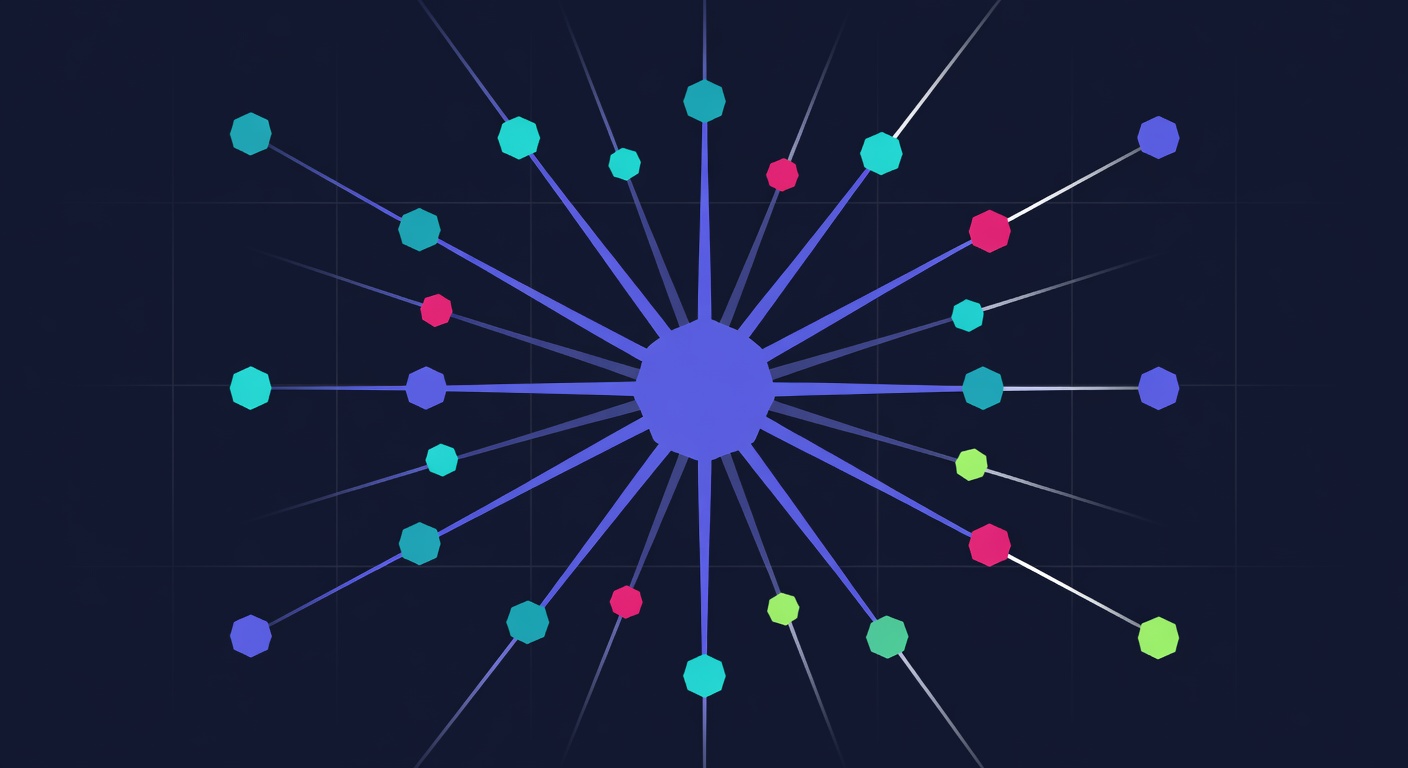
An AI aggregator is a platform that gives you access to multiple AI models through a single interface and a single subscription. Instead of paying OpenAI for ChatGPT, Anthropic for Claude, and Google for Gemini separately, you pay one service and use all of them.
Think of it like how Kayak works for flights. You don't go to every airline's website separately. You search once and see all your options. AI aggregators do the same thing for AI models.
How AI Aggregators Work
Behind the scenes, aggregators connect to the APIs of major AI providers. When you send a message to GPT-5 through an aggregator, it routes your request to OpenAI's API, gets the response, and displays it in the aggregator's interface. When you switch to Claude, the same thing happens with Anthropic's API.
The aggregator handles the API keys, billing, token management, and interface. You just pick a model and start chatting. The response quality is identical to what you'd get from the provider directly because it's the same model running on the same servers.
Aggregators combine provider access behind one subscription and a monthly allowance. That can cost less than stacking several provider subscriptions, but usage is still bounded.
What You Get
A typical AI aggregator gives you:
- Multiple model families: GPT-5, Claude, Gemini, Mistral, Llama, and often dozens more. The exact lineup varies by aggregator.
- One interface: No switching between apps or tabs. Select a model from a dropdown and your conversation uses that model.
- One subscription: Instead of paying $20 to OpenAI + $20 to Anthropic + $25 to Google, you pay one fee.
- Model comparison: Some aggregators let you send the same prompt to multiple models simultaneously to compare responses.
What You Don't Get
Aggregators provide model access, not platform features. This distinction matters. Here's what you typically lose compared to direct subscriptions:
- Custom GPTs and the GPT Store: These are OpenAI-specific features tied to the ChatGPT platform.
- Claude Projects: Anthropic's conversation organization feature isn't available through third-party access.
- Google Workspace integration: Gemini's ability to read your Gmail and Google Drive requires Google's native app.
- Platform-specific memory: Each provider's memory and personalization features stay on their platform.
For most users, these features are nice-to-haves. The core value of AI, sending a prompt and getting a quality response, transfers fully through an aggregator. The platform features are extras that maybe 20% of paying users rely on heavily.
Why the Market Is Moving This Direction
The AI subscription model in 2025-2026 looks a lot like early streaming video. Each provider wants you to subscribe directly. They each charge roughly the same amount. If you want access to everything, you stack subscriptions and the total gets ridiculous.
Streaming eventually gave us bundle services and aggregator apps. AI is following the same pattern, just faster. The technology is commoditizing. GPT-5, Claude, and Gemini are all excellent. The differences between them are real but narrowing. When multiple products deliver similar quality, the market rewards whoever offers the most convenient and affordable access.
Aggregators also solve a practical problem. No single AI model is best at everything. GPT-5 handles coding better. Claude writes more naturally. Gemini integrates with Google services. Mistral is fast for simple queries. People who use AI seriously benefit from switching between models. Aggregators make that switching painless.
Types of AI Aggregators
Not all aggregators work the same way:
Full-service aggregators provide a polished interface, conversation management, and usually a flat monthly fee. Admix is an example, offering 350+ AI models from $10/month with a clean chat interface.
API routers like OpenRouter provide unified API access for developers. You get one API key that routes to multiple models. These are technical tools, not consumer products.
Self-hosted frontends like Open WebUI or LibreChat let you connect your own API keys and build a custom multi-model interface. Free software, but you bring your own API access and pay per token.
For most people who want to use AI without managing technical infrastructure, a full-service aggregator makes the most sense. You're paying for convenience and predictable pricing on top of model access.
Common Objections
"Is the quality the same?" Yes. Aggregators access the same models through official APIs. A GPT-5 response through an aggregator is generated by the same GPT-5 running on OpenAI's servers. The bytes traveling through a different interface don't change the model's output.
"How do they make money at $10/month?" Bulk API pricing. An aggregator buying millions of tokens gets significantly better rates than an individual user. The flat subscription model also means power users subsidize light users, similar to how gym memberships work.
"Will providers cut off aggregator access?" Providers offer commercial API access specifically for this purpose. Aggregators are paying customers of OpenAI, Anthropic, and Google. Cutting them off would mean losing API revenue. The providers' business models depend on widespread API usage.
Should You Use One?
If you're paying for one AI subscription and it handles everything you need, an aggregator saves you money but doesn't change your workflow much.
If you're paying for two or more AI subscriptions, an aggregator is almost certainly cheaper and more convenient. The math works heavily in your favor.
If you're on free tiers but want premium model access without the $20/month price tag, an aggregator offers a middle ground. Premium models at a lower price point.
The AI aggregator category is still young, but the value proposition is already clear. Same models, lower price, one interface. That's a hard combination to argue against.
Try all the models mentioned in this article
Admix gives you GPT-5, Claude, Gemini, and 350+ AI models in one app. Compare responses side by side. Free to start.
Start free on Admix