OpenAI Cut GPT-5.6 Luna 80% and Shipped a Faster Sol Tier
Quick verdict
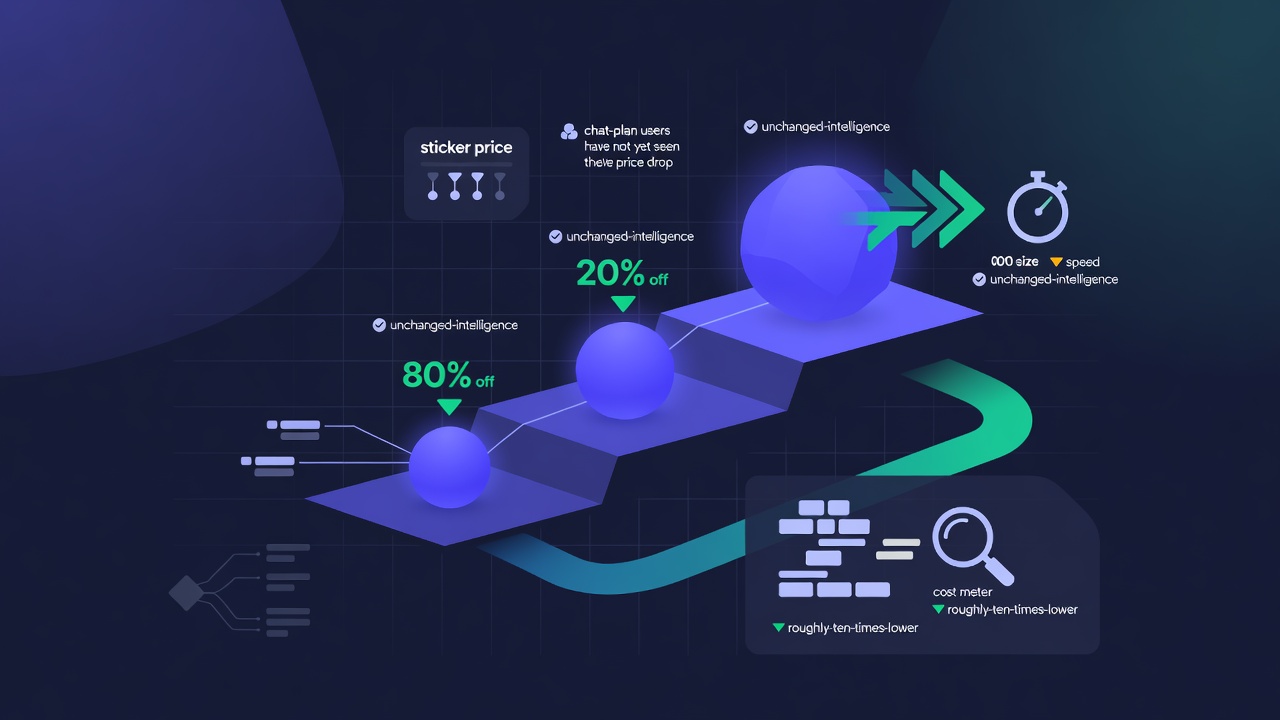
OpenAI cut GPT-5.6 prices hard. Luna is down 80 percent, Terra is down 20 percent, and there is a new Sol Fast tier that runs up to 2.5 times faster for twice the standard price with no change in the model's intelligence. The clearest signal is what OpenAI did with its own products: auto-review in the ChatGPT app and the Codex CLI is moving off GPT-5.4 and onto Luna, and the company expects that to cost roughly 10 times less. If you build on the API or run coding agents, your per-task bill just dropped. If you only pay for a $20 chat plan, this is a preview of where the floor is heading.
What actually shipped
This is a pricing reset across the GPT-5.6 line, not a new model. Same weights, lower numbers, plus one new speed option.
- GPT-5.6 Luna: 80 percent cheaper. Luna is the small, cheap tier, so this makes the already-affordable model close to a rounding error for high-volume work.
- GPT-5.6 Terra: 20 percent cheaper. Terra is the mid tier, the one most people reach for when Luna is too light and Sol is overkill.
- GPT-5.6 Sol Fast: a new option on the top Sol tier that runs up to 2.5 times faster for 2 times the standard price, with what OpenAI describes as no change in intelligence. You pay more per token to wait less.
- Auto-review moves to Luna: the automatic code review inside the ChatGPT app and the Codex CLI is switching from GPT-5.4 to Luna, and OpenAI expects about 10 times lower cost for that feature.
The Sol Fast framing is the interesting one because it splits price from capability. Until now, paying more on the Sol tier bought you a smarter answer. Sol Fast buys you the same answer sooner. That is a real product for agent workflows, where a chain of 40 tool calls turns latency into wall-clock time you actually feel, and less useful for a one-shot chat where a couple of extra seconds does not matter.
OpenAI tied the cuts to efficiency work across what it called the model, the inference stack, and the agentic harness. In plain terms: the savings come from serving the same model more cheaply, not from shrinking it. That is why the price can fall while the intelligence stays put.
Why it matters
Price cuts on a chat plan get headlines. Price cuts on the API move the whole market, because that is what every app, agent, and coding tool actually runs on. When Luna drops 80 percent, every product built on Luna gets cheaper to operate overnight, and the vendors have to decide whether to pocket the margin or pass it on. The ones fighting for your subscription will pass it on.
The auto-review move is the tell. OpenAI cut prices for customers and, at the same time, rebuilt one of its own features on the cheaper tier to save 10x. A company only does that when it trusts the cheaper model to hold quality on a real task. That is a stronger endorsement of Luna than any benchmark chart. If auto-review is good enough on Luna for OpenAI, a lot of workloads people currently run on Sol or Terra can probably drop a tier and save money without losing much.
For anyone tracking what AI actually costs, this is the pattern to watch: the sticker price on chat plans has sat at $20 for over a year, but the underlying token prices keep falling. That gap is where the value is. We keep the current numbers on every tier in the 2026 AI subscription cost guide, and the bigger direction of travel in where AI pricing is heading.
If you run coding agents, the bigger lesson is that tier choice is now a real lever, not only that prices are lower. Sending easy edits to Luna and saving Sol for the hard refactors is exactly the routing move that cuts an agent bill without hurting output, which is the case we walk through in cutting AI coding agent costs with model routing. And if you would rather not pin yourself to one lab's pricing at all, running several models behind one bill is covered in the best app for running multiple AI models.
Video: GPT-5.6 price cuts and Sol Fast explained
This walks through the 80 percent Luna cut and the new Sol Fast speed tier, and where they land against the rest of the GPT-5.6 line.
FAQ
How much cheaper is GPT-5.6 Luna now?
80 percent cheaper. Terra dropped 20 percent at the same time. Both are pricing changes on the existing models, so the capability is unchanged, only the cost per token is lower.
What is GPT-5.6 Sol Fast?
A new option on the top Sol tier that runs up to 2.5 times faster for 2 times the standard price. OpenAI says the intelligence is the same as regular Sol, so you are paying purely for lower latency. It mainly helps agent workflows where many sequential calls make speed add up.
Does this affect ChatGPT Plus or do I need the API?
These are API and developer-tier prices, so the direct savings land with anyone building on the models or running coding agents. Chat-plan users do not see a lower monthly bill today, but cheaper tokens tend to flow downstream into cheaper and more generous products over time. For where the paid plans earn their keep, see free vs paid AI.
Should I switch my workload to a cheaper tier?
Possibly. OpenAI moved its own auto-review to Luna to save about 10x, which suggests many everyday tasks run fine on the cheaper tier. The GPT-5.6 lineup and where each tier fits is covered in our GPT-5.6 general availability breakdown.
Sources
- @OpenAI - GPT-5.6 Luna down 80%, Terra down 20%, plus Sol Fast
- @OpenAIDevs - Sol Fast: 2.5x lower latency for 2x price, no change in intelligence
- @OpenAI - auto-review in ChatGPT and Codex CLI moves to Luna for ~10x lower cost
- @OpenAIDevs - cuts tied to efficiency across model, inference stack, and harness
- @sama - on the price and performance shift
Further reading
Try all the models mentioned in this article
Admix gives you GPT-5, Claude, Gemini, and 350+ AI models in one app. Compare responses side by side. Free to start.
Start free on Admix