Google's New Gemini Work Agent Routes to Claude Too, Which Tells You Where This Is Going
Quick verdict
Google Cloud launched a single Gemini agent that lives in the cloud, remembers your work across sessions, orchestrates its own sub-agents, drops into Workspace apps inline, and routes work across different models. The detail worth pausing on is not the memory or the Workspace integration. It is that the agent will serve Claude Opus 5 and Sonnet 5.5 next to Google's own Gemini models. The company with the most reason to push you onto its own model is instead building a router that reaches for a competitor's model when that is the better call. That is the multi-model approach going from a scrappy third-party idea to something a trillion-dollar incumbent ships as a headline feature, and it validates the whole premise that no single lab wins every task.
What actually shipped
Sundar Pichai framed it as one universal agent for your business rather than a pile of narrow bots. The pieces Google called out:
- Persistent memory, so the agent carries context across sessions instead of forgetting everything when you close the tab
- Sub-agent orchestration, where the main agent spins up and coordinates smaller agents to handle parts of a job
- Inline Workspace integration, so it works inside Docs, Sheets, and the rest rather than in a separate window
- Routing across models, picking which model handles a given request
On that last point, TestingCatalog reported that Claude Opus 5 and Sonnet 5.5 will be offered alongside Gemini models in the Gemini Business tier. So this is not a closed Google-only system. It is a routing layer that treats Anthropic's models as first-class options inside Google's own product.
Why a Google multi-model router is the real story
For a couple of years the case for running more than one model lived mostly in independent tools and aggregators. The pitch was always the same: different models win different tasks, pricing shifts constantly, and marrying one vendor leaves value on the table. The counter from the big labs was to keep you inside one ecosystem, because every query that goes to a rival is revenue and a data point they lose.
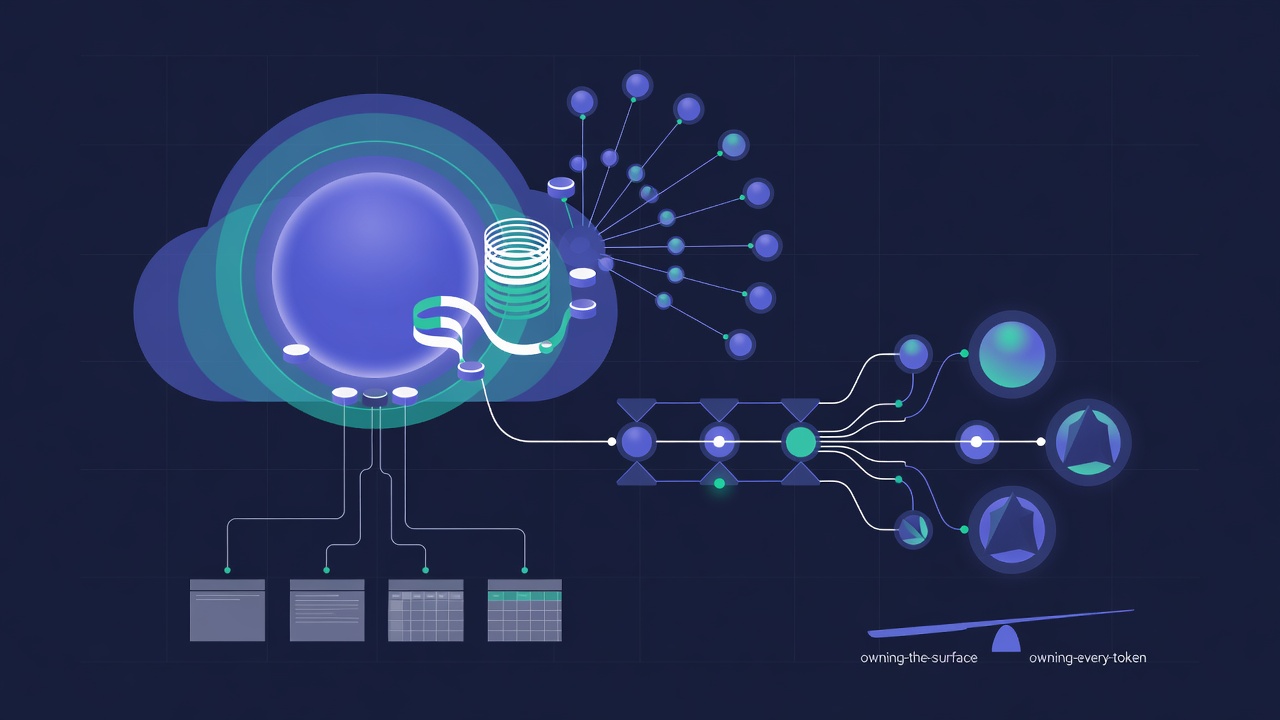
Google shipping a multi-model agent, in its own flagship cloud product, breaks that posture in public. When the vendor with the strongest incentive to keep you on Gemini decides it is better off routing some of your work to Claude, the argument for single-vendor lock-in gets harder to make. Google is betting that owning the agent, the memory, and the Workspace surface matters more than owning every token underneath, and that letting Claude handle the jobs it does best keeps customers from leaving for a competitor's router entirely.
That is the same logic consumers have been acting on with AI aggregators: hold several models behind one interface and send each task to whichever model clears the bar. Seeing it land in Google Cloud is confirmation that routing across models is the direction of travel, not a niche workaround. The enterprise version arrives first, as these things usually do, but the shape is the same one we have argued for on the consumer side.
What it means if you pay for AI
If you are an individual or a small team rather than a Google Cloud customer, you are not signing up for this agent tomorrow. The useful signal is strategic. The multi-model thesis is no longer contested at the edges; the largest players are building it into their core products. That makes two habits more valuable, not less.
First, stop treating your choice of AI as a loyalty decision. The task should pick the model, and the best model for a coding job, a research summary, or a quick classification is often not the same one. Even Google agrees enough to route to Claude. For how the major options actually compare, our OpenAI vs Anthropic vs Google breakdown is the place to start.
Second, watch what you pay for access. If routing is becoming standard, paying three separate flat subscriptions to reach three labs is the expensive way to get what a single multi-model layer gives you for less. That is the recurring point in our guide to cutting AI subscription costs: the saving comes from reaching the right model per task without stacking monthly fees, which is exactly the capability Google just built into Gemini Business.
Video: Google's universal Gemini agent
Google Cloud's own introduction to the universal agent, covering the memory, orchestration, and Workspace pieces.
FAQ
What is Google's universal Gemini agent?
It is a single cloud-resident agent Google Cloud launched for business use. It keeps persistent memory across sessions, orchestrates its own sub-agents, integrates inline with Workspace apps, and routes requests across different models rather than running on one.
Does it really use Claude?
According to TestingCatalog, Claude Opus 5 and Sonnet 5.5 will be offered alongside Gemini models in the Gemini Business tier. So the agent routes work to Anthropic's models inside Google's own product, and Gemini is only one of the options it reaches for.
Can I use this if I am not a Google Cloud customer?
The launch targets business and enterprise customers first, so most individuals will not sign up for this specific agent. The takeaway for everyone else is that multi-model routing is going mainstream, which is the same idea behind consumer AI aggregators.
Why would Google route to a competitor's model?
Because no single model wins every task, and Google would rather keep you inside its agent and Workspace, even if some requests go to Claude, than lose you to a rival that offers more model choice. It is a bet that owning the surface beats owning every token.
Sources
- Sundar Pichai - one universal Gemini agent with persistent memory, sub-agent orchestration, and model routing
- TestingCatalog - Claude Opus 5 and Sonnet 5.5 offered alongside Gemini in Gemini Business
Further reading
Try all the models mentioned in this article
Admix gives you GPT-5, Claude, Gemini, and 350+ AI models in one app. Compare responses side by side. Free to start.
Start free on Admix