Cursor Router Says It Cuts Coding Costs 60% by Picking the Model for You
Quick verdict
Cursor launched an automatic model router that claims frontier-quality results at 60% lower cost, with no quality drop versus sending everything to Opus 4.8. On the same day, OpenAI rolled hard spend limits out to every API account. Neither is a flashy model launch, but together they mark a shift: the expensive part of AI coding is no longer picking the best model, it is not overpaying to use it on work that did not need it. Routing is becoming table stakes.
What Cursor shipped
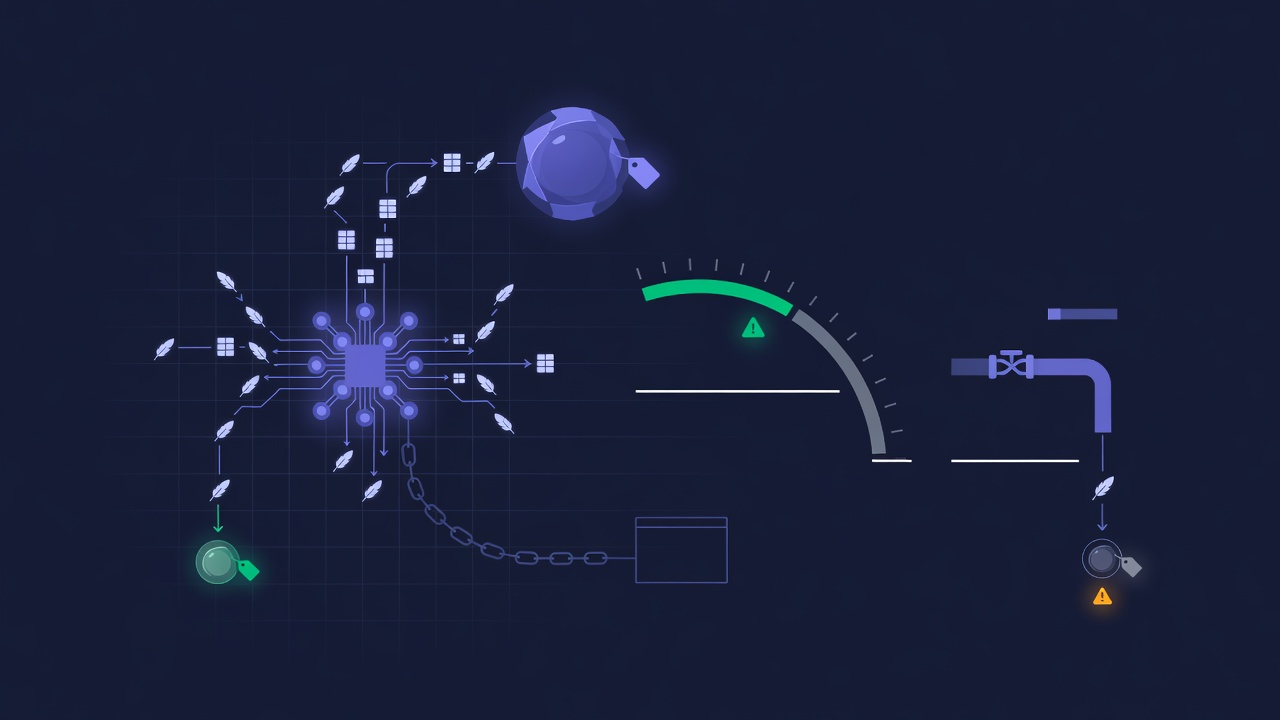
Cursor Router is an intelligent model router built into the editor. Instead of you choosing a model per request, it looks at each task and sends it to the model that can handle it most cheaply. Simple edits go to cheaper, faster models. Hard reasoning and multi-file refactors go to the expensive frontier models. Cursor says the net result in early access is frontier-quality output at roughly 60% lower cost, with no measurable quality drop compared to routing everything to Opus 4.8.
The pitch is worth reading carefully, because the baseline matters. "60% cheaper than routing everything to Opus 4.8" is not the same as "60% cheaper than what you pay now." If you already mix models by hand, your savings will be smaller. But most people do not. Most people pick one strong model and use it for everything, including the trivial stuff, which is exactly where the waste hides.
Why this is the same week's other big move
OpenAI put hard spend limits on all API accounts the same day. On its own that is a boring account-settings update. Next to Cursor Router, it points at the same underlying reality: teams running high-volume coding and agent workloads are getting surprised by their bills, and the vendors know it. One company is solving it by routing spend down automatically. The other is solving it by letting you cap spend before it runs away. Both are admissions that per-token pricing at agent scale is hard to predict and easy to blow through.
Routing is not new, it is just going mainstream
The idea of sending each request to the cheapest model that can handle it has been around for a while. What changed is that it moved from a thing power users rigged up themselves into a default feature inside the tools everyone already uses. We wrote about the do-it-yourself version in how to cut coding-agent costs with model routing, and about the team-scale version in enterprise cost routing with open models. Cursor building it into the editor is the same idea with the setup removed.
The economics behind it keep getting more attractive because the cheap models keep getting better. Together recently reported that pairing Kimi K3 Max with a frontier model through routing gave a 16% quality lift over either one alone, at a fraction of the all-frontier cost. When the cheap tier is genuinely capable, routing stops being a compromise and starts being the smart default.
Video: setting up cheaper model routing in Cursor
A hands-on look at running a cheaper model inside Cursor without giving up much quality.
The catch worth checking
Automatic routing is only as good as its judgment about which task is hard. When it guesses wrong and sends a genuinely difficult problem to a weak model, you get a worse answer, and you might not notice until it has cost you time. The "no quality drop" claim comes from Cursor's own early-access testing against one baseline, so treat it as a starting point, not a settled fact. The honest way to evaluate a router is on your own work, watching for the cases where it under-routes.
There is also a lock-in question. A router built into one editor optimizes for that editor's model lineup and pricing deals. That is fine until you want to switch tools or add a model the router does not support. The more your cost savings depend on one vendor's routing, the harder that vendor is to leave. It is the same trade-off that runs through every Claude Code versus Cursor comparison: convenience now against flexibility later.
Why it matters
The center of gravity in AI coding costs has moved. A year ago the question was which model is best. Now the best models are close enough that the bigger lever is not paying frontier prices for work a cheap model handles fine. Cursor Router and OpenAI's spend limits are both bets that cost control, not raw capability, is where the next round of competition happens. For anyone running these tools daily, the takeaway is simple: you are probably overpaying by using one strong model for everything, and the tools are finally starting to fix that for you.
FAQ
How does Cursor Router actually save money?
It routes each request to the cheapest model capable of handling it, instead of sending everything to a top-tier model. Trivial edits go to cheap models, hard tasks go to expensive ones, and the mix comes out cheaper than paying frontier prices across the board.
Is the 60% savings real?
It is Cursor's early-access figure, measured against routing everything to Opus 4.8. If you already switch models by hand, your savings will be smaller. Test it on your own workload before trusting the headline number.
Does routing hurt output quality?
Cursor claims no quality drop versus its all-Opus baseline, but routers can under-route, sending a hard problem to a weak model. Watch for the cases where the answer is worse than usual, since that is where routing quietly costs you.
What is the downside of built-in routing?
Lock-in. A router tied to one editor optimizes for that editor's models and pricing, which makes switching tools harder. Keeping your workflow portable across models protects you from that, as we cover in the best way to use multiple AI models.
Sources
- @cursor_ai - Cursor Router launch and the 60% lower-cost claim
- @OpenAIDevs - hard spend limits rolled out to all API accounts
- @togethercompute - routing Kimi K3 Max with a frontier model for a 16% lift
Further reading
Try all the models mentioned in this article
Admix gives you GPT-5, Claude, Gemini, and 350+ AI models in one app. Compare responses side by side. Try it for 7 days for $1.99.
Try Admix for $1.99