Cursor Projects Puts a Coordinator Agent in Charge of a Fleet of Coding Subagents
Quick verdict
Cursor launched Projects, a persistent workspace where a coordinator agent plans a large piece of work and hands the actual coding to a fleet of subagents running in the cloud. The change is small on paper but it adds up: instead of opening a fresh chat for every task and re-explaining your codebase each time, you keep one long-lived project thread that remembers what it is doing. For anyone already running agents daily, this moves the job from writing prompts to managing a team of agents. That is a different skill, and it is where coding tools are all heading.
What Cursor shipped
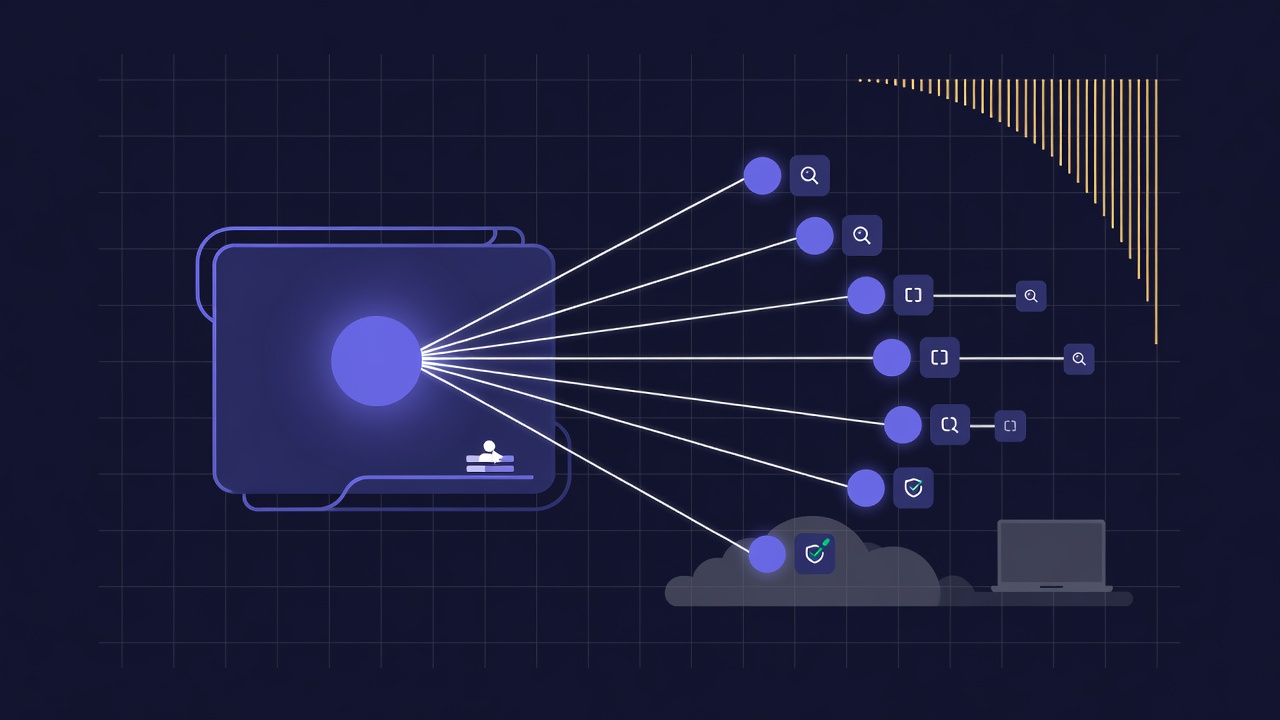
A Project is a persistent thread tied to a dedicated cloud computer. At the center sits a coordinator agent that does not write code itself. It plans the work, spins up subagents for research, implementation and testing, runs them in parallel, and brings the results back to you to review. Because the work runs in the cloud, it keeps going after you close your laptop, and the context carries across sessions instead of dying when you close a tab.
Cursor says a single coordinator can delegate to a large number of subagents at once, and that Projects can watch Slack channels, pull requests, or a schedule so recurring work does not need a fresh prompt every Monday. The company also reported that heavy Projects users merge about 6x more pull requests, and new users merge roughly 30% more, though those are Cursor's own early numbers and the launch materials do not spell out compute costs or account limits for running agents at that scale.
Why this matters
The one-chat-per-task model was always a bit of a lie about how software actually gets built. Real work is a project, not a prompt. It spans days, touches many files, and needs someone holding the thread of what is done and what is left. Projects is Cursor admitting that and building the missing layer: a manager that keeps state so you do not have to re-brief a blank agent every morning.
It also changes what "good at AI coding" means. When one agent did one task, the skill was writing a sharp prompt. When a coordinator runs a fleet of subagents, the skill is scoping the work, reviewing what comes back, and catching the subagent that quietly went down the wrong path. That is closer to code review and tech-lead work than to prompting, and it rewards people who can think in terms of a plan rather than a single question.
The same week's pattern
Cursor was not alone. The same window saw OpenAI ship an Agents API with hosted sandboxes for code execution, and Cognition release SWE-2, a coding model built to run cheaply inside agent loops. Three different companies converged on the same idea in a few days: the interesting unit is no longer a stateless model call, it is a persistent, stateful environment where agents run over time. We dug into the Cognition side of this in Cognition's SWE-2 and the race to cheaper coding agents.
The competitive read is that the model is becoming a commodity and the harness around it is becoming the product. If your agents remember context, run in the cloud, and coordinate with each other, you win even when a rival has a slightly smarter base model. That is the bet, and it is the same one running through every serious Claude Code versus Cursor comparison right now.
Video: using Cursor Projects in practice
A walkthrough of Projects alongside Cursor's models and skills, showing how the persistent workspace actually behaves day to day.
The catch worth checking
Running a fleet of cloud subagents is not free, and the launch post is quiet on what it costs. A coordinator that can spin up many agents in parallel is also a coordinator that can burn tokens in parallel, so the bill scales with how ambitious your projects get. Before you lean on this for real work, watch what a typical project actually consumes, because "one coordinator, many subagents" is a pricing model as much as a feature.
There is also a review problem hiding in the convenience. When subagents write code in the background and hand you finished diffs, the temptation is to skim and merge. But the coordinator's plan is only as good as its understanding of your intent, and a subagent that misread the task can produce clean-looking code that does the wrong thing. The more work you delegate, the more your job becomes catching those cases, not celebrating the PR count. Merging 6x more pull requests is only good if they are the right pull requests.
Where it fits
If you already live in Cursor, Projects is worth trying on a real multi-step feature rather than a toy task, since the persistent-context payoff only shows up on work that spans sessions. If you are still choosing tools, this is one more reason to weigh the whole workflow, not just the model, when you compare options. Our roundup of the best AI coding agents covers how the main tools stack up, and if budget is the constraint, the best free coding agents is the place to start.
FAQ
What is Cursor Projects?
It is a persistent workspace in Cursor where a coordinator agent plans a body of work and delegates the coding to subagents running on a dedicated cloud computer. Unlike a normal chat, the project keeps its context across sessions instead of starting fresh each time.
Does the coordinator agent write code?
No. The coordinator plans the work and hands implementation, research, and testing to subagents, then collects their output for you to review. Its job is coordination, not writing the code itself.
Is Cursor Projects free?
It is rolling out in beta, but running a coordinator plus a fleet of cloud subagents consumes compute, and Cursor has not detailed the costs. Treat the pricing as an open question and watch your usage before relying on it. If cost is your main concern, compare it against free coding agents first.
How is this different from Claude Code?
Both are moving toward persistent, multi-agent workflows, but they package it differently, and the right pick depends on your stack and how you review agent output. See our Claude Code vs Cursor vs Codex breakdown for the current state of that fight.
Sources
- @cursor_ai - Projects launch, coordinator agent and persistent project threads
- Cursor - working with agents and subagents in the editor
- @cognition - SWE-2 release, part of the same shift toward agent-first coding
Further reading
Try all the models mentioned in this article
Admix gives you GPT-5, Claude, Gemini, and 350+ AI models in one app. Compare responses side by side. Free to start.
Start free on Admix