AI Model Routers Explained: LLM Routing, Auto Routers, and Claude Code Router
What an AI router actually is
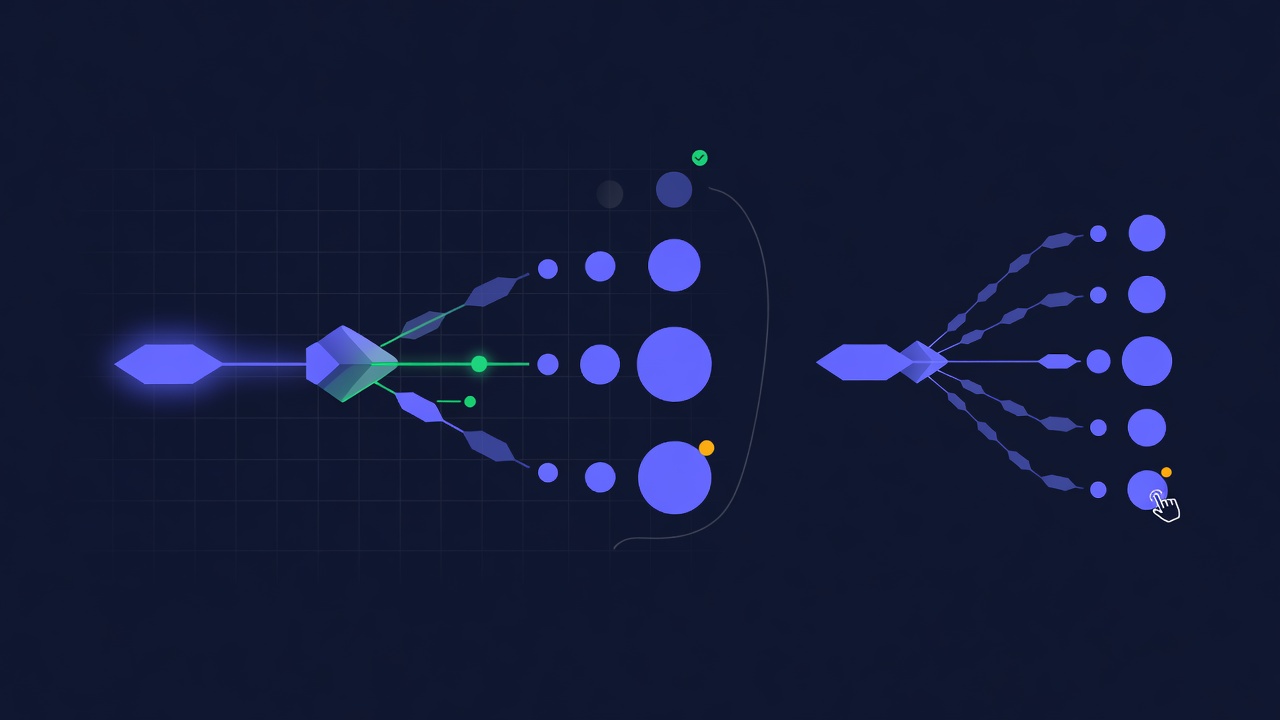
An AI router, sometimes called an LLM router or an auto router, is a layer that sits between your prompt and the models. Instead of you deciding "everything goes to GPT-5" or "everything goes to Claude," the router looks at each incoming request and sends it to whichever model is the best fit or the cheapest one that can still handle it. An easy prompt might go to a small, cheap model. A hard reasoning task might go to a frontier model. You send one request, and the routing happens behind the scenes.
The point is not magic. It is that most workloads are a mix of easy and hard, and paying frontier prices for the easy 70% is waste. A router tries to spend the expensive model only where it earns its keep.
The main types of AI router
"AI router" gets used for a few different things. They overlap but they are not the same, so it helps to keep them straight.
OpenRouter
OpenRouter is an API aggregator. You hit one endpoint with an OpenAI-style request, and it forwards to hundreds of models across many providers. It can route by price, by uptime, and it can fall back to another provider when one is down. It is a router in the plumbing sense: one API, many backends. It is not primarily trying to guess which model gives the best answer to your specific question, though it does offer auto-selection options. Mostly it is about access, failover, and billing in one place.
Claude Code router
"Claude Code router" usually means community tooling, the most common being an open-source project that intercepts requests from Anthropic's Claude Code agent and reroutes them to other models or providers. The reason people run it: Claude Code is great, but sending every small edit and file read to a top-tier model adds up. The router lets you point background or low-stakes steps at a cheaper model, or at a local model, while keeping the strong model for the reasoning-heavy work. It is a config layer, not a different agent.
General LLM router and auto router concepts
Outside any single product, "LLM router" describes a pattern. A classifier or a set of rules reads the request and picks a model. Some routers train a small model to predict whether a cheap model will get the answer right, and only escalate to the expensive one when it probably will not. Others route on plain signals: task type, prompt length, required context window, latency budget.
Self-hosted routing
If you run your own stack, you can build routing yourself. Route by task type (code to one model, summarization to another), by cost ceiling, by latency target, or by context length when a prompt is too big for the cheaper model's window. This is the most work and the most control. You own the logic and the fallback behavior.
When routing helps
Routing pays off when your traffic is uneven and you care about the bill or the speed. Concretely:
- Cost on bulk or simple tasks. Classifying tickets, tagging, short rewrites, and boilerplate do not need a frontier model. Route them to a cheap one and the savings are real.
- Latency. Small models answer faster. If a step is on a user-facing path, routing easy calls to a quick model tightens response time.
- Failover. When one provider has an outage or rate-limits you, a router can fall back to another so your app keeps working.
- Cheap for easy, frontier for hard. The core win. Send the easy prompt to the cheap model and escalate the genuinely hard ones. You pay top rates only where they matter.
When routing does not help
Routing is not free and it is not always the answer.
- When you want to compare answers yourself. A router picks one model and returns one answer. If your whole goal is to see how three models handle the same prompt and judge for yourself, routing removes the exact thing you wanted.
- When quality on a specific task beats cost. For a task where one model is clearly best and being wrong is expensive, just use that model. A router that occasionally downgrades to save a few cents can cost you more in bad output than it saves.
- When the added complexity is not worth it. Routing adds a moving part, a classifier or ruleset that can misroute. On low volume, the savings may not cover the maintenance.
Router vs. picking it yourself
There is a real tradeoff here, and it is worth being blunt about. An automatic router optimizes for cost and speed, and in exchange it hides which model actually answered you. That is fine for background jobs. It is frustrating when you are the one who wants to see the differences, because the whole value of running several models is comparing what they say.
The other end of that spectrum is a multi-model chat. That is where Admix fits. Admix is a multi-model chat aggregator: you send one prompt and see answers from many models side by side, then pick the one you like. That is manual comparison, done by you, not automatic routing. Admix does not auto-route or auto-select a model for you, and it is honest about that. If your goal is to keep control and eyeball the differences, that is the point. If your goal is to never think about model choice again and just cut the bill, an automatic router is the better tool, and the two approaches answer different questions.
Video: what is an LLM router
For a short primer on how LLM routing works and why teams adopt it, this overview is a good starting point:
FAQ
What is an AI router?
It is a layer that sends each prompt to the best-fit or cheapest-capable model automatically, instead of you sending everything to one model. Easy requests can go to a small cheap model, hard ones to a frontier model, and some routers add failover when a provider goes down.
What is claude code router?
It usually refers to community tooling, most often an open-source project, that intercepts requests from Anthropic's Claude Code agent and reroutes them to different or cheaper models and providers. People use it to send low-stakes steps to a cheap or local model while keeping the strong model for the heavy reasoning, which cuts the cost of running the agent all day.
Is OpenRouter a router?
Yes, mainly in the plumbing sense. OpenRouter gives you one API that forwards to many models across many providers, with price-based selection and failover. It is more an access and aggregation layer than a system that tries to guess the single best answer for your specific question, though it does offer auto-selection options.
Does routing save money?
It can, when your traffic mixes easy and hard work. Sending the easy majority to a cheap model and reserving the frontier model for genuinely hard prompts is where the savings come from. It does not help, and can hurt, if you route quality-critical tasks to a weaker model to shave a few cents, or if your volume is too low to cover the added complexity.
Sources
- OpenRouter - unified API and routing across many model providers
- claude-code-router - open-source project for routing Claude Code requests to other models
- Anthropic - Claude Code overview
Further reading
Try all the models mentioned in this article
Admix gives you GPT-5, Claude, Gemini, and 350+ AI models in one app. Compare responses side by side. Free to start.
Start free on Admix