Five Vendors Shipped Decision-Model APIs in One Day. Here's What They Cost.
Quick verdict
Three weeks ago decision models were one startup's idea plus a few open clones. Now they are a product category with price tags. In a single day OpenAI, Microsoft, Perplexity, Cloudflare, and Liquid all put out commercial decision-model APIs, each one priced to make the small yes/no and which-path calls inside an app for next to nothing. OpenAI's lands at $0.10 per million input tokens with no charge for output. Perplexity quotes $0.017 per thousand decisions. If you are paying for AI by the token, the news here is not another model you can chat with. It is that the routing and scoring work burning a lot of those tokens just got a cheaper place to run.
What a decision model actually returns
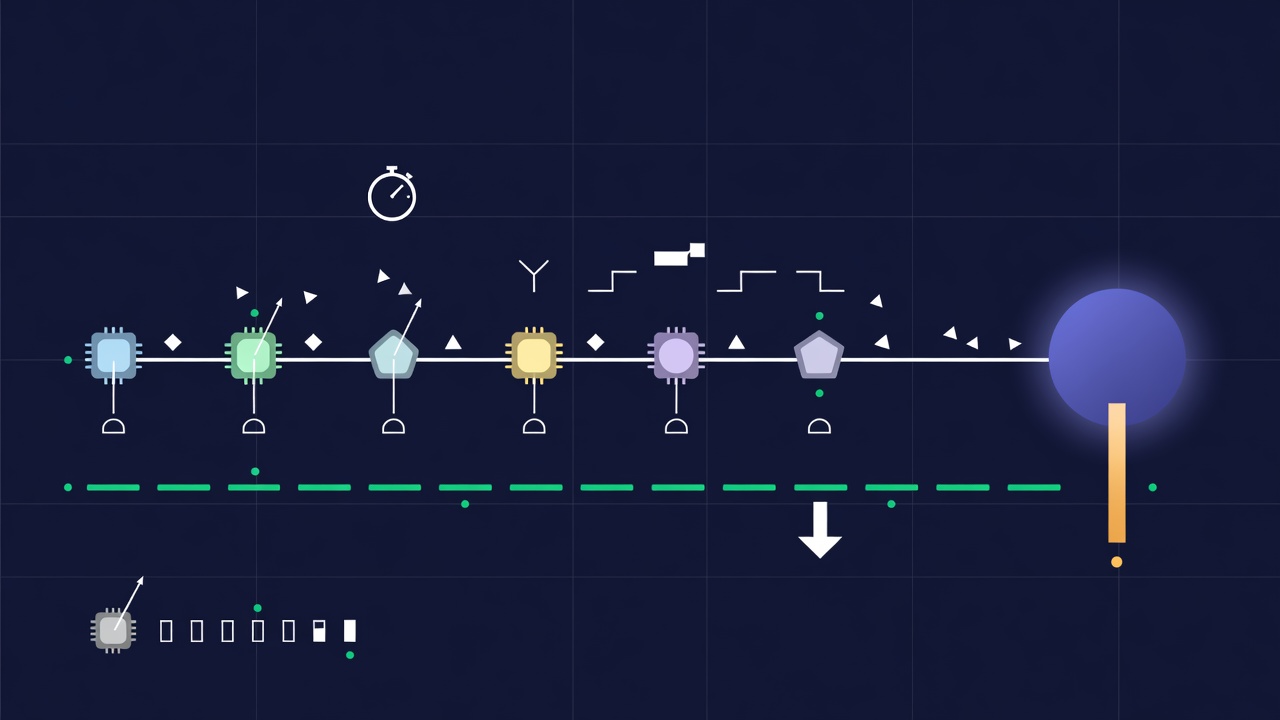
A decision model does not write a reply. It reads an input and hands back a typed answer: a probability that something is true, a pick from a list, or a score against a set of levels, all in one forward pass. That makes it fast and cheap compared to asking a full language model to produce the same judgment in prose and then parsing it back out. @scaling01 noted how quickly the format spread once the first one landed. If you want the background on how the category started, our piece on Jev and the first wave of open clones covers where it came from.
This issue is about what changed after that: the big names arrived, and they brought pricing.
What each vendor shipped
The launches landed close enough together that it read like a coordinated category reveal.
- OpenAI Decisions API. Three request types, which map to the three answer shapes above: probability a condition holds, pick from a list, or score against levels. It takes text and images, runs on GPT-6 Luna, and OpenAI puts it at "up to 10x faster" than the generative setup it replaces, at $0.10 per million input tokens with no output charge (@LearnOpenCV).
- Perplexity pplx-decider-v1.1-27b. Perplexity claims the top Decision Bench accuracy at 94.5% across 1,071 cases, priced at $0.017 per thousand decisions (@perplexitydevs).
- Cloudflare clef. The new clef-omni takes audio, video, image, and text. clef-flash came in cheaper than the reference model and the family runs about 2x faster, with weights posted on Hugging Face (@michellechen).
- Liquid d1. Now served through Vercel's AI Gateway, with vision support for classify, route, and score tasks (@vercel_dev).
- Microsoft-Decision-1. Aimed at LLM-as-judge work and screening scientific hypotheses. An early evaluator was blunt that these models still slip on consistency and harder decisions (@omarsar0).
Why the pricing matters
A lot of what an agent does is not writing. It is deciding. Which tool to call, whether to escalate to a human, which of three retrieved passages to trust, whether a task is hard enough to warrant the expensive model. Those are each a single typed judgment, and until now most of them were handled by sending a prompt to a chat model and reading back a sentence. That is slow and it costs real money at volume.
LangChain gave the clearest number. Routing each task to the cheapest adequate model, with a decision model making the call, cut the median cost per task on Open SWE by 64% (@hwchase17). LangSmith now uses one as a judge that returns separate typed answers for difficulty and correctness on every trace (@hwchase17). On the serving side, vLLM's Semantic Router can answer several questions about one input in a single pass with per-option probabilities (@vllm_project).
For anyone watching their AI bill, this is the same lesson that drives smart model routing in general: most requests do not need a frontier model, and the trick is deciding which ones do without paying frontier prices to make that call. We walk through that logic in our guide to AI routing and the more coding-focused cut coding-agent costs with routing.
Video: how a model decides without generating words
If the idea of a model that scores instead of writes is new to you, this explainer is a good primer on why the architecture is faster and where the accuracy comes from.
The catch
Cheap and fast is not the same as right. Microsoft's own launch came with a caveat from an early evaluator about consistency on harder calls (@omarsar0), and a lot of the eye-catching accuracy numbers lean on class imbalance, where guessing "no" is correct most of the time. A model that is 94% accurate at spotting a rare event can still be wrong far more often than that figure suggests when the event is rare. So these are a good fit for high-volume, low-stakes arbitration inside a loop, and a worse fit for the one decision that actually needs to be right. The reasoning you care about still belongs to the big model.
You can train one yourself
The other sign a category has arrived is that the recipe is now a weekend project. Unsloth put out a free notebook that turns Qwen3.5-4B into a decision model on 8GB of VRAM (@UnslothAI). A separate walkthrough on the smaller Qwen3.5-0.8B reported accuracy climbing from 37% to 65% in 60 training steps, about ten minutes on 4GB (@akshay_pachaar). When fine-tuning your own routing judge costs ten minutes and a consumer GPU, the commercial APIs are competing on convenience and calibration, not on being the only option.
FAQ
Is a decision model the same as a small language model?
No. A small language model still generates text. A decision model returns a typed answer, like a probability or a pick, in one pass. That is what makes it faster and cheaper for yes/no and routing work, and also why it cannot hold a conversation.
Will this lower what I pay for AI subscriptions?
Not directly, since these are developer APIs rather than consumer plans. But the routing they enable is the same mechanism that lets a service send cheap requests to cheap models, which is exactly the efficiency an AI aggregator uses to keep one bill lower than stacking separate subscriptions.
Which one should I use?
If you already live in a given ecosystem, the native option is the easy default: OpenAI's Decisions API, Liquid d1 through Vercel, or Cloudflare clef. Perplexity is quoting the strongest accuracy number. For anything cost-sensitive and high-volume, test two against your own data before trusting the leaderboard figures.
Sources
- @LearnOpenCV - OpenAI Decisions API pricing and request types
- @perplexitydevs - pplx-decider-v1.1-27b accuracy and price
- @michellechen - Cloudflare clef-omni and clef-flash
- @julien_c - clef weights on Hugging Face
- @vercel_dev - Liquid d1 on the Vercel AI Gateway
- @omarsar0 - Microsoft-Decision-1 and the consistency caveat
- @hwchase17 - 64% cost cut on Open SWE from routing
- @vllm_project - Semantic Router Decision 2.0
- @UnslothAI - free notebook to train a decision model on 8GB
Further reading
Try all the models mentioned in this article
Admix gives you GPT-5, Claude, Gemini, and 350+ AI models in one app. Compare responses side by side. Try it for 7 days for $1.99.
Try Admix for $1.99