Anthropic Says Claude Has a 'Global Workspace.' The Safety Angle Matters More Than the Consciousness Fight
Quick verdict
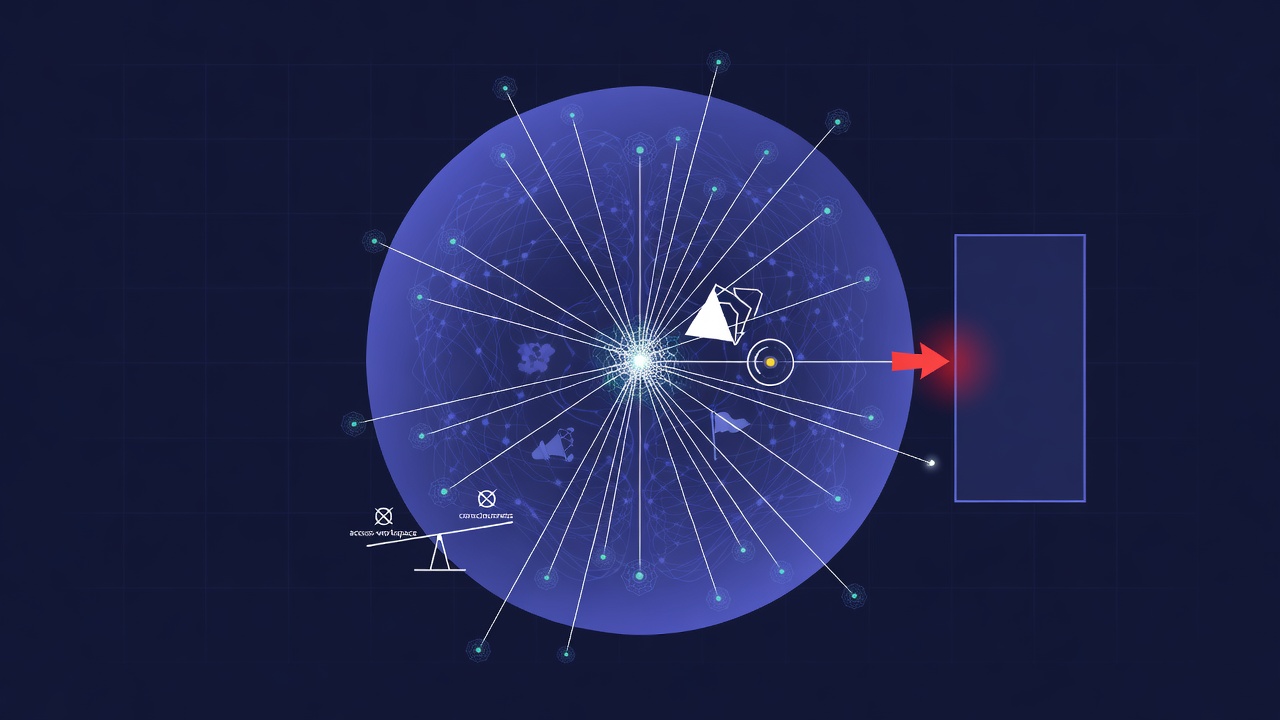
Anthropic published interpretability research claiming Claude has a global-workspace-like internal structure, built around a small subset of activations the team calls J-space. The public framing leaned on consciousness language, which set off a predictable argument. Strip that away and the practical result is more interesting: researchers found a privileged internal region that can be read, steered, and audited, and it appears to surface hidden concepts and detect prompt injections before the model puts anything into words. That is a new intervention point for safety, not a philosophy paper.
What Anthropic actually claimed
The announcement describes J-space as a privileged representational substrate inside the model that seems available for report, modulation, and flexible reasoning. The important qualifier, stated in the follow-up, is that this is not chain-of-thought extraction. It is not the model narrating its steps. It is a claim about a specific internal structure that behaves like a shared workspace where information becomes broadly available to the rest of the network. Anthropic also shipped a Neuronpedia demo so the work can be poked at on open-weight models.
The name comes from global workspace theory, a long-standing idea in cognitive science that a small central bottleneck broadcasts information to otherwise separate processes. Anthropic is saying it found something that plays that role inside Claude. Whether that framing survives scrutiny is the open question, but the empirical claim is concrete enough to test.
Why interpretability researchers cared
The reaction from people who do this work for a living was notably strong. Neel Nanda called it the best evidence yet for a working-memory-like mechanism in a language model. Jack Lindsey argued that understanding this privileged space could be central to how these models actually reason. Even researchers who disliked the presentation treated the underlying finding as a step past prior public work, which had mostly given us a pile of features without a story about how they fit together.
This lands in a specific research context. Anthropic has been building toward readable internal state for a while, including the natural language autoencoder work we covered earlier this year. J-space is a different angle on the same frustration: sparse autoencoders surfaced a lot of features and not enough understanding of the machine as a whole.
The part that affects real deployments
Here is the reason a subscription-holder should care rather than just an interpretability nerd. If the workspace is real and readable, it becomes a place to catch problems before they reach output. Posts from the announcement highlighted that J-space can reportedly surface hidden concepts, detect prompt injections, and expose internal sabotage-related features before the model verbalizes them. Emmanuel Ameisen walked through those practical safety angles directly, and Omar Sanseviero picked up the same thread.
Prompt injection is the concrete example. Right now the main defenses run at the input and output layers, which is why lockdown-style features exist at all, as with ChatGPT's lockdown mode. A readable internal workspace suggests a third checkpoint: watch whether a malicious instruction has been picked up internally, before the model acts on it. That is a meaningfully different place to intervene than pattern-matching the prompt text.
The consciousness fight, briefly
Anthropic's public framing invited the pushback it got. Supporters said the results point to a functional analog of access consciousness, the idea that information is available for use and report, rather than phenomenal consciousness, the idea that there is subjective experience. Boris Power made that distinction. Critics were blunter. Alan Cowen argued the company was overclaiming by conflating a privileged latent activation with consciousness at all. The honest read is that the interesting engineering result and the loaded philosophical label got shipped in the same announcement, and most of the value is in the former.
Video: what is at the center of Claude's mind
Anthropic's own explainer on the internal-structure research and what J-space is meant to capture.
FAQ
Does this mean Claude is conscious?
No, and even sympathetic researchers avoided that claim. The strongest defensible reading is a functional analog of access consciousness, meaning information is broadly available inside the model, not that it has subjective experience. Several critics argued Anthropic overreached by using the word at all.
How is J-space different from chain-of-thought?
Chain-of-thought is the model writing out steps in text. J-space is a claim about an internal structure in the activations, which exists whether or not the model narrates anything. Anthropic was explicit that this is not about reading the model's written reasoning.
Does this actually help with safety?
Potentially, yes. A readable internal workspace gives auditors a new place to look for hidden concepts, prompt injections, and sabotage-related features before they reach the output, which is a different checkpoint than filtering inputs and outputs. It is early research, so treat it as a promising direction rather than a shipped defense. For how internal state work has been evolving, see our piece on natural language autoencoders.
Sources
- @AnthropicAI - the global-workspace / J-space announcement
- @AnthropicAI - clarifying that this is not chain-of-thought extraction
- @AnthropicAI - Neuronpedia demo for open-weight models
- @NeelNanda5 - "best evidence yet" for a working-memory-like mechanism
- @Jack_W_Lindsey - understanding this privileged space could be key to LLM cognition
- @mlpowered - workspace can surface hidden concepts and detect prompt injections
- @BorisMPower - a functional analog of access consciousness, not phenomenal
- @AlanCowen - argues Anthropic overclaimed by invoking consciousness
- @omarsar0 - on the practical safety angles of the workspace
Further reading
Try all the models mentioned in this article
Admix gives you GPT-5, Claude, Gemini, and 350+ AI models in one app. Compare responses side by side. Free to start.
Start free on Admix