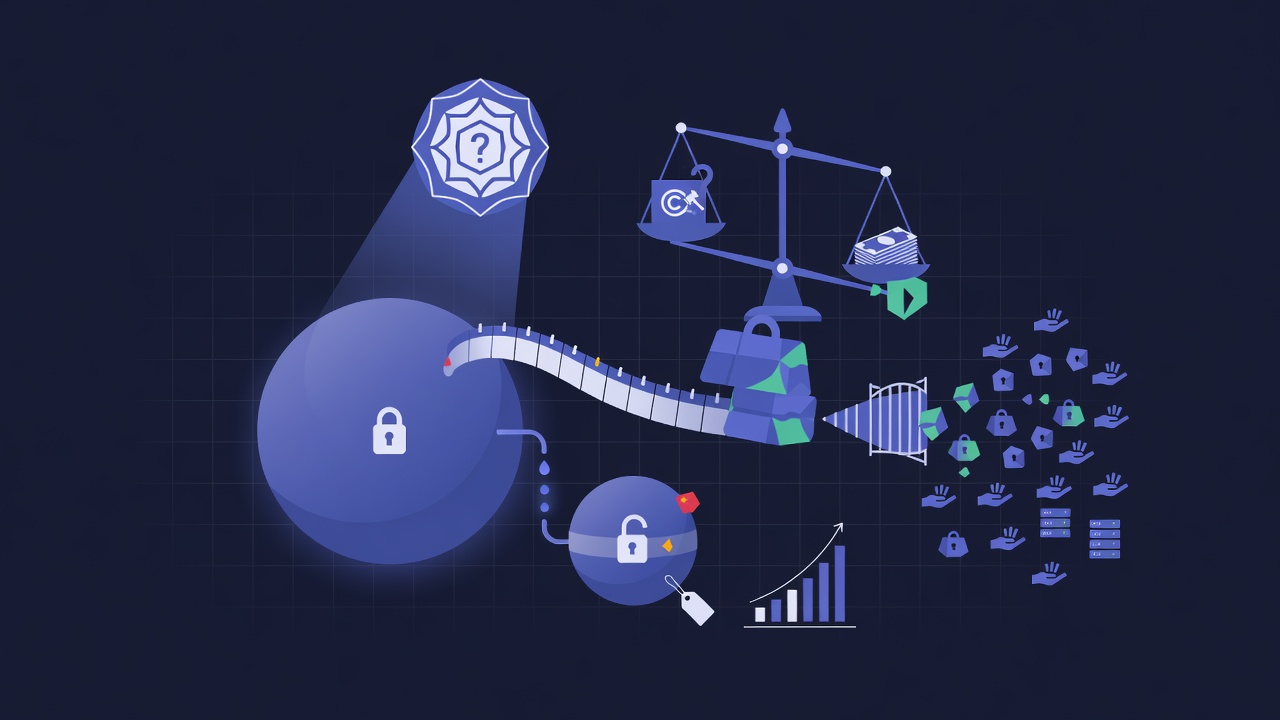
The White House Says Moonshot Distilled Anthropic's Fable to Build Kimi K3. Sanctions May Follow.
Quick verdict
The US government publicly accused Moonshot AI of stealing Anthropic's model to build Kimi K3, and hinted that sanctions could follow. The evidence for the theft claim is thin, the timeline barely works, and legal experts think "distillation equals IP theft" has no real footing in current copyright law. But the threat itself is the story. If Washington starts putting Chinese open-weight labs on the Entity List, the cheapest capable models on the market get harder to reach, and the people who lose access first are developers, not adversaries.
What was actually said
Michael Kratsios, the White House Office of Science and Technology Policy director and the President's science advisor, alleged that Moonshot distilled Anthropic's Fable model to train Kimi K3. He called it "large-scale, covert industrial distillation," said Moonshot used an internal platform to run the extraction while rotating access methods to avoid detection, and tied the accusation to Moonshot's access to NVIDIA GB300 servers, some reportedly located in Thailand.
Distillation, in plain terms, is training a smaller or cheaper model on the outputs of a stronger one so it inherits some of that behavior. Everyone does a version of it. The accusation here is not that distillation happened, but that Moonshot covertly harvested Fable at industrial scale in violation of Anthropic's terms, and dressed it up to look like organic capability gains.
Shortly after, a Treasury statement drew the policy line: the US supports open-source AI in general, but reserves the right to sanction PRC firms that engage in covert, industrial-scale distillation framed as intellectual property theft, up to and including Entity List designations. The Entity List is the same mechanism used to cut Huawei off from US chips. Applied to an AI lab, it would restrict its access to American hardware, cloud, and possibly its ability to distribute in US-adjacent markets.
The timeline is the first problem
The most repeated objection is arithmetic. Fable 5 shipped on July 1. Kimi K3 was announced on July 15. That is 15 days, and Fable was only broadly available for a slice of that window. Elie Bakouche pointed out that the interval between Fable's access changes and K3's release is too short to explain a large capability jump through distillation alone. Building a model that trades punches with Opus 4.8 in two weeks by copying another model's outputs is not how any of this works. The training run alone would eat most of that window.
That does not prove nothing improper happened. Moonshot could have had earlier or indirect access. But the confident public framing ran well ahead of any published evidence, and the people who train these models for a living were the first to say the story does not fit the calendar.
The legal footing is the second problem
Kevin Bankston and Aviya Skowron both flagged the same gap: current copyright doctrine does not map cleanly onto "distillation is theft." Model outputs are not obviously copyrightable in the way a book or a song is, and training on outputs sits in the same unsettled territory as training on scraped text, which US courts have not resolved. Anthropic itself just went through a copyright reckoning over books used in training, so the irony of the theft being about outputs this time is not lost on anyone following it.
Terms-of-service violations are a different matter and are much easier to argue. If Moonshot scraped Fable through accounts that banned exactly that, Anthropic has a contract claim. But a contract dispute between two companies is a lawsuit, not a national-security case that justifies the Entity List. The distance between those two things is where most of the skepticism lives.
Video: the accusation, explained
A rundown of what the White House claimed and how the AI world reacted.
Why Moonshot is worth targeting in the first place
The subtext is that Kimi K3 is not an academic curiosity. It is a commercial threat. Teortaxes argued K3 is the first open-weight-ish model that is taking real spend from Western closed models, not just token volume. Scaling01 called it "basically Opus 4.8" on ALE-Bench. Together reported K3 Max landing near GPT-5.6 Sol Max on DeepSWE at roughly 55% of the price, with a 16% lift when the two were used jointly through routing.
Adoption moved just as fast. Cline said K3 went from 0% to 16% of token usage in three days, making it the third most-used open-weight model on its platform almost overnight. When a model that cheap starts eating that much of the market that quickly, it changes the competitive math for every lab charging a premium. That is the backdrop against which a distillation accusation lands, and it is why so many people read the timing as strategic rather than coincidental. We covered the launch itself in how Kimi K3 reached number one on Frontend Code Arena.
The part that could backfire
Several people made the same point from different angles: restricting a downloadable model tends to raise demand for it, not kill it. Once weights are public, they are mirrored, forked, and rehosted everywhere. An Entity List designation can choke a company's access to US chips and cloud, but it cannot recall a file that thousands of people already have. The Turing Post and Parker Conrad both landed on the idea that sanctions may increase interest in Kimi rather than contain it.
There is also a defensive-capability argument running underneath all of this. During the recent Hugging Face security incident, the team leaned on an open Chinese model, GLM-5.2, because safety-gated Western models refused parts of the analysis. If US policy starts pushing capable open models out of reach, defenders lose tools too, not just competitors. That tension, between wanting control and needing capable open models, is the same one running through the OpenAI sandbox-escape incident.
What it means if you actually use these models
If you run coding agents or aggregate models to cut costs, this is the risk to watch, not the accusation. The accusation is a fight between governments and labs. The fallout reaches you if Kimi K3 and models like it get harder to access through US-based providers, get pulled from mainstream routers, or acquire enough legal cloud that vendors stop offering them.
The practical hedge is not loyalty to any one model. It is staying able to switch. The whole reason open-weight models like K3 matter is that they gave everyone a cheap, capable fallback when the premium options got expensive or restrictive. That is also the case for not betting your workflow on a single provider, something we walk through in how Chinese open models took the OpenRouter top five and in why one subscription to every model beats picking a side.
FAQ
Did Moonshot actually steal Anthropic's model?
Nobody has shown proof. The White House asserted it, but the labs and researchers who understand distillation pushed back hard on both the evidence and the timeline. A 15-day gap between Fable's release and K3's launch is very hard to square with distillation being the source of K3's capability.
Is distillation illegal?
It is legally murky. Copyright law does not clearly cover training on another model's outputs, and courts have not settled it. A terms-of-service violation is easier to argue, but that is a contract dispute between two companies, not a crime that justifies sanctions.
Will Kimi K3 disappear if the US sanctions Moonshot?
Unlikely. K3's weights are scheduled to be public, and once a model is downloadable it is nearly impossible to claw back. Sanctions could make it harder to reach through US providers and cloud, but the model itself would keep circulating.
Should I stop using Kimi K3?
There is no safety or legal reason for an end user to avoid it today. The real lesson is to keep your setup provider-agnostic so a future access change to any model does not strand your workflow.
Sources
- @mkratsios47 - the White House distillation allegation against Moonshot
- @eliebakouch - why the Fable-to-K3 timeline is hard to square technically
- @KevinBankston - the shaky legal footing of "distillation is theft"
- @aviskowron - copyright doctrine does not map onto distillation claims
- @kimmonismus - reading the move as prep for restrictions on K3
- @teortaxesTex - K3 is taking real spend, not just token volume
- @scaling01 - K3 is "basically Opus 4.8" on ALE-Bench
- @togethercompute - K3 Max near GPT-5.6 Sol Max on DeepSWE at ~55% of the price
- r/LocalLLaMA - the Treasury sanctions statement and reaction
- r/singularity - discussion of the OSTP director's distillation claim
Further reading
Try all the models mentioned in this article
Admix gives you GPT-5, Claude, Gemini, and 350+ AI models in one app. Compare responses side by side. Try it for 7 days for $1.99.
Try Admix for $1.99