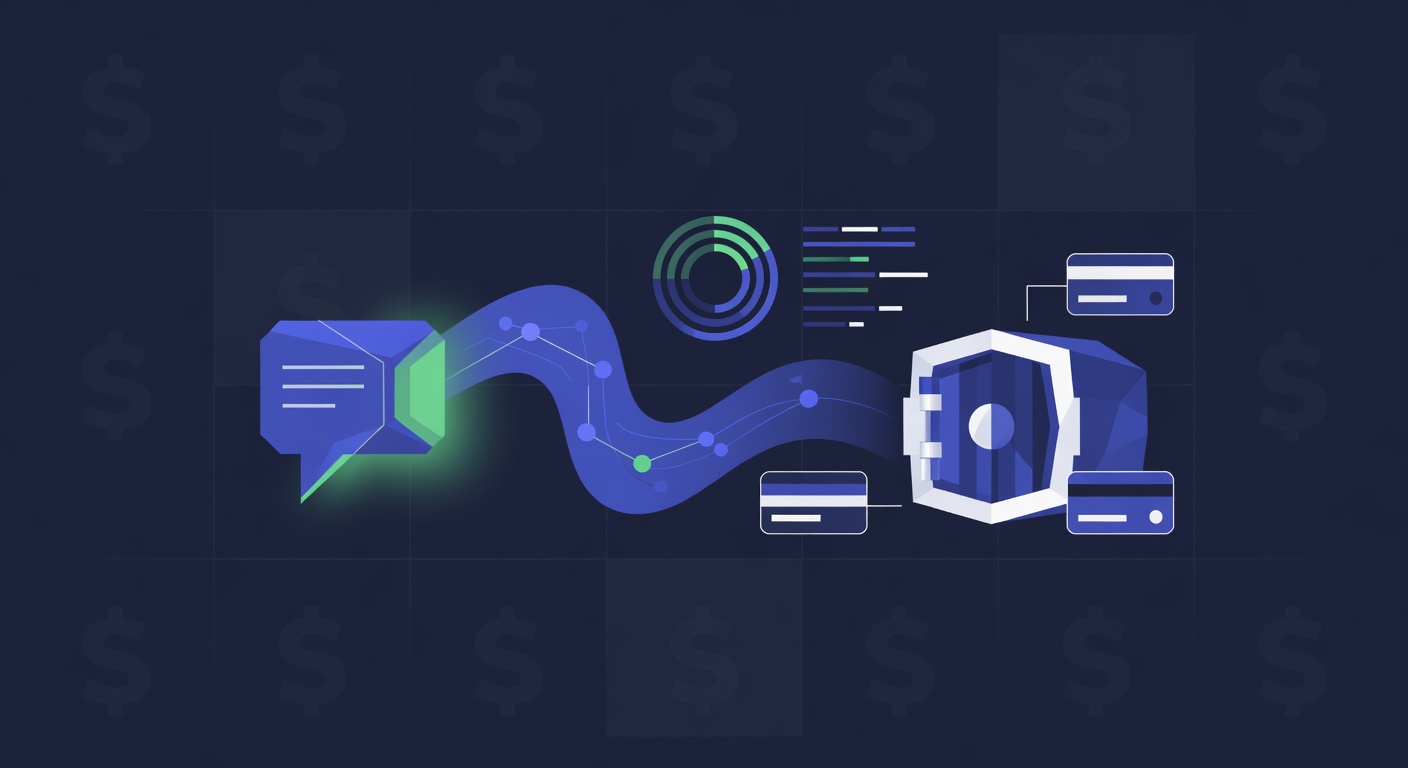
ChatGPT Now Connects to Your Bank Account. OpenAI Is Quietly Building the Personal CFO.
Quick verdict
OpenAI shipped a personal finance experience inside ChatGPT this week, available to Pro users in the US. You connect your bank, credit cards, and brokerage with read-only authorization, and ChatGPT does spending analysis, category breakdowns, and grounded Q&A over your actual transactions. Internal benchmarks cited GPT-5.5 Thinking at 79/100 and GPT-5.5 Pro at 82.5/100 on complex personal-finance tasks.
This is the same play as the recent health-records integration. Structured personal context, flowing into the agent, becoming the moat.
What actually shipped
- Who: ChatGPT Pro users in the United States. Not Plus. Not Free. Not international.
- How: secure account connections via the standard financial-data aggregator pattern (read-only OAuth to your bank).
- What it does: spending analysis, transaction categorization, budget surfacing, and Q&A grounded in your authorized data.
- Model: GPT-5.5, with reasoning tuning that performed well on internal personal-finance evals (Thinking 79/100, Pro 82.5/100).
The framing from OpenAI exec Fidji Simo is consistent: more structured personal context flowing into the agent. Finance is just the second domain after health. There will be more.
Why this is bigger than a feature
Three things stack up here.
First, ChatGPT now has a reason to know things about you that other chatbots don't. If your transactions live inside the chat session, the agent's quality on financial questions improves in a way Claude or Gemini can't match without a similar integration. That's a structural advantage, not a model advantage.
Second, this compresses the fintech assistant layer. Apps like Copilot Money, Monarch, and Rocket Money have built businesses around "AI for your money" with proprietary categorization and chat surfaces. ChatGPT just added all of that as a feature, for free if you're already paying Pro. The unit economics on those standalone apps just got harder.
Third, it's a signal about where OpenAI thinks the agent economy ends up. Not a chat window. A connected assistant that knows your accounts, your calendar, your health records. The product is the integration depth.
Benchmarks: what those numbers mean
| Model | Internal personal-finance eval (out of 100) |
|---|---|
| GPT-5.5 Thinking | 79 |
| GPT-5.5 Pro | 82.5 |
OpenAI did not publish the eval methodology in detail. The numbers are internal benchmarks on what OpenAI calls "complex personal-finance tasks," which presumably means multi-step reasoning over transaction data, not single-shot calculator questions. Without an independent re-run, treat the 82.5 as directional: it says "good enough for OpenAI to ship to paying customers," not "verified state of the art."
Video: how it actually works
The trust question nobody wants to answer
The obvious objection: am I going to connect my bank to ChatGPT?
The honest answer is "depends who you are." Plaid has been doing this exact connection pattern for over a decade across thousands of fintech apps. Mint, Robinhood, Wealthfront, Copilot Money all use the same plumbing. The marginal trust ask of connecting that data to OpenAI is not categorically different. It is the same OAuth flow, the same read-only scope, the same revocation path.
What is different is what OpenAI could do with the data over time. Plaid is a pipe. OpenAI is a model company that benefits from training signal. Their privacy posture for this product matters more than it does for a bank-connection middleware. The terms of service language on training, retention, and third-party sharing for the finance product is the thing to read carefully before connecting anything.
What it means for Admix users
If you're already paying ChatGPT Pro at $200/month, finance integration is included. If you're paying Plus at $20/month, you're not getting it. If you're routing through an aggregator, you definitely don't have it — aggregators expose model APIs, not OpenAI's wrapped product surfaces like memory, agents, or this finance feature.
That gap between "model access via API" and "product features on the consumer app" is widening fast. It's the same dynamic as ChatGPT Voice or Codex mobile. Saving money by going API-direct still works for raw model use, but you trade away these higher-level integrations.
FAQ
Is ChatGPT Personal Finance available on Plus?
No. Pro only, at $200/month, US only at launch.
What data does ChatGPT see when I connect my bank?
Read-only access to transactions, balances, and account metadata via the standard financial-data aggregator pattern. OpenAI's privacy policy for the product specifies the training and retention terms. Read it before connecting.
Can Claude or Gemini do this?
Not natively. You can hand-paste transaction CSVs to any of them, but the connected-account experience is currently ChatGPT-only. See how the three labs compare.
Is GPT-5.5 better than GPT-5 for finance?
OpenAI's internal benchmarks suggest yes, but the methodology isn't public. Our GPT-5.5 vs Claude Opus 4.7 deep-dive covers what we know about the model's reasoning improvements.
Will this kill apps like Copilot Money or Monarch?
It puts real pressure on them. Those apps now have to justify their separate subscription against a feature bundled into a $200/month plan that does many other things.
Sources
- @ChatGPTapp - Personal finance experience launch
- @fidjissimo - Structured personal context pattern (health, finance)
- @kimmonismus - Internal finance benchmarks (GPT-5.5 Thinking 79, Pro 82.5)
Further Reading
Try all the models mentioned in this article
Admix gives you GPT-5, Claude, Gemini, and 350+ AI models in one app. Compare responses side by side. Free to start.
Start free on Admix