Anthropic Put Enterprise IT in Charge of Claude's MCP Connectors
Quick verdict
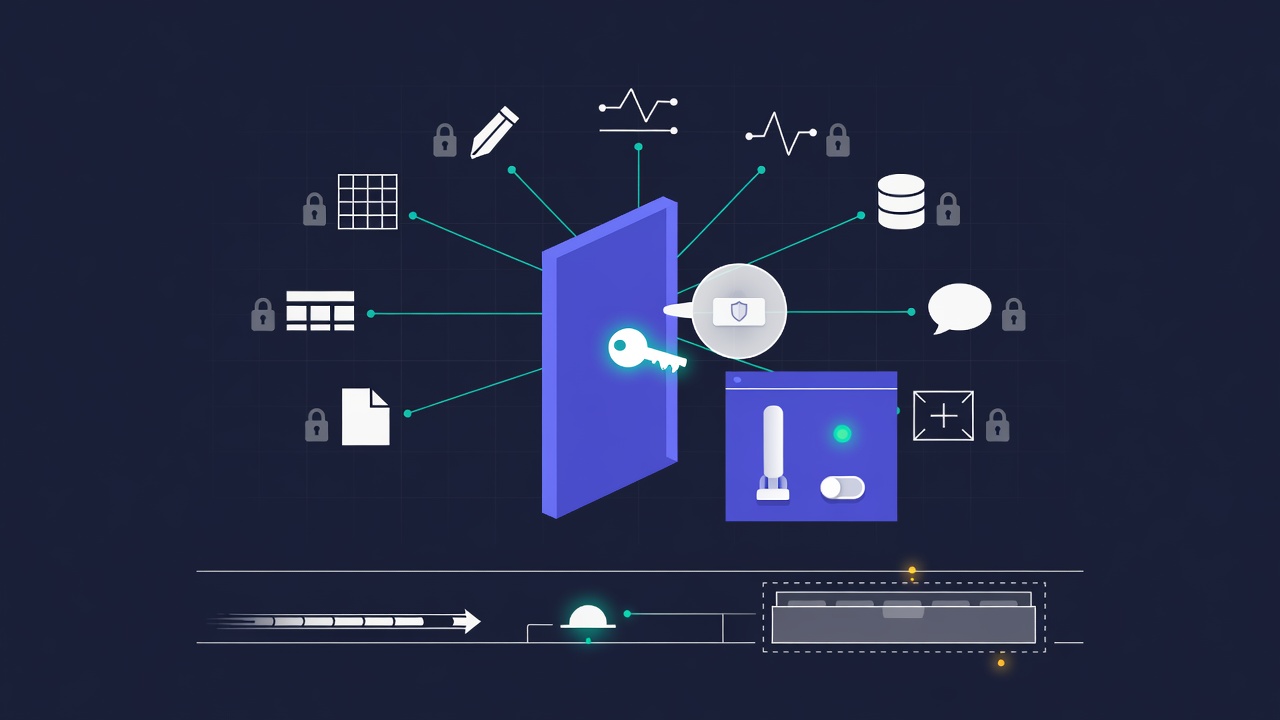
Anthropic turned on enterprise-managed auth for MCP connectors. Instead of every employee clicking through a separate OAuth screen for Asana, Atlassian, Canva, Datadog, Figma, Notion, Slack, and Supabase, the org now wires those connections through its own identity provider once, and IT controls who gets what. It is not a flashy launch, and that is the point. This is the plumbing that decides whether a security team lets Claude touch internal tools at all. Pair it with the MCP roadmap Anthropic laid out the same week, and the story is clear: the protocol is growing the boring parts that enterprise deployment actually needs.
What actually shipped
MCP connectors already let Claude reach into outside tools. The friction was authorization. Until now each user authorized each connector themselves, one OAuth handshake at a time, which is fine for a solo developer and a nightmare for a 5,000-seat company with a compliance team watching.
- Authorization now centralizes through the organization's identity provider. Admins connect a tool once at the org level, and end users stop performing per-tool OAuth for the supported connectors.
- The launch list of managed connectors covers Asana, Atlassian, Canva, Datadog, Figma, Notion, Slack, and Supabase, which is a spread of project tracking, design, observability, and database tools rather than a single category.
- Because access is granted and revoked centrally, offboarding an employee or pulling a tool no longer means chasing down individual grants. IT flips it in one place.
Alongside the auth change, Anthropic and the MCP community published a roadmap that reads like a checklist for production use rather than a wish list. The headline items:
- Support for long-running workloads with streaming and server push, so an agent can kick off a job that takes minutes or hours and get progress back instead of timing out.
- HTTP for local servers, which smooths how tools running on a user's own machine talk to the model.
- Progressive discovery for large catalogs, so a company with hundreds of internal tools does not have to dump every one into the model's context at once.
- Standard identities and delegated permissions, the piece that lets an agent act on behalf of a specific user with that user's exact access, not a shared super-token.
None of these are model capabilities. They are the unglamorous glue between a working demo and a deployment an auditor will sign off on, and that glue is exactly what has been missing.
Why it matters
The gap in agent tooling this past year was never really about intelligence. It was that the demos assumed a trust model no real company runs. Per-tool OAuth, shared credentials, and no central kill switch are fine on a laptop and unacceptable inside a bank. By moving authorization behind the identity provider the company already uses, Anthropic removes the single biggest reason a security review says no.
This is also a competitive move, and it lands in the enterprise race more than the consumer one. Whoever makes agents deployable under existing IT controls wins the seats that pay the most, and both Anthropic and OpenAI know it. We track that fight in how OpenAI, Anthropic, and Google actually stack up. The lesson for anyone evaluating agent platforms is to stop scoring on benchmark charts alone and start asking how authorization, revocation, and audit logging work, because that is what determines whether you can ship.
For teams outside the enterprise tier, the read is a little different. The managed-auth piece is aimed at big orgs, but the roadmap items, long-running jobs, delegated permissions, progressive discovery, benefit anyone building on MCP. And if your setup already spans several assistants that each want their own connector logins, keeping them one keystroke apart is easier than betting a workflow on one vendor's plumbing. That is the case for running multiple AI models under one subscription, and it is why the tooling around the model is starting to matter as much as the model, a theme we dig into in the best AI coding agents.
Video: MCP and enterprise connectors, explained
Background on how MCP connectors work, why authorization was the sticking point, and where the protocol is heading for production use.
FAQ
What is enterprise-managed auth for MCP connectors?
It routes authorization for MCP connectors through your company's identity provider instead of having each employee authorize each tool by hand. Admins connect a tool once at the org level, and access is granted, controlled, and revoked centrally.
Which connectors support it at launch?
Anthropic named Asana, Atlassian, Canva, Datadog, Figma, Notion, Slack, and Supabase. The point of the managed model is that adding more later is an admin action, not another round of per-user OAuth.
Does this help me if I am not on an enterprise plan?
The managed-auth feature targets organizations with an identity provider. But the broader MCP roadmap, long-running workloads, delegated permissions, and progressive discovery for big tool catalogs, improves the protocol for everyone building agents on it.
What is still missing?
Several roadmap items are announced rather than shipped, including standard identities with delegated permissions and streaming for long jobs. Those are the pieces that fully close the gap to auditable enterprise deployment, so treat them as direction, not done.
Sources
- @ClaudeDevs - enterprise-managed auth for MCP connectors announcement
- @_philschmid - MCP roadmap: long-running workloads, HTTP for local servers, progressive discovery, delegated permissions
- @ClaudeDevs - Claude web and desktop streaming performance update
Further reading
Try all the models mentioned in this article
Admix gives you GPT-5, Claude, Gemini, and 350+ AI models in one app. Compare responses side by side. Free to start.
Start free on Admix