Anthropic Started Watermarking Claude's Text. The Rollout, Not the Tech, Broke Trust.
Quick verdict
Anthropic started embedding invisible watermarks in the text Claude produces, so a hidden signal now travels inside prose that reads completely normal. The technical part is the least controversial piece. Researchers who study this, including Arvind Narayanan, agree that quality-preserving text watermarking is doable and already has a shipping precedent in Google DeepMind's SynthID. The argument is about everything around the tech: Anthropic explained it badly, did not say who gets to run the verifier, and never drew a clean line between text Claude wrote and text a person wrote with Claude's help. If you use Claude to draft or edit anything, this now sits inside your output whether you thought about it or not.
What actually changed
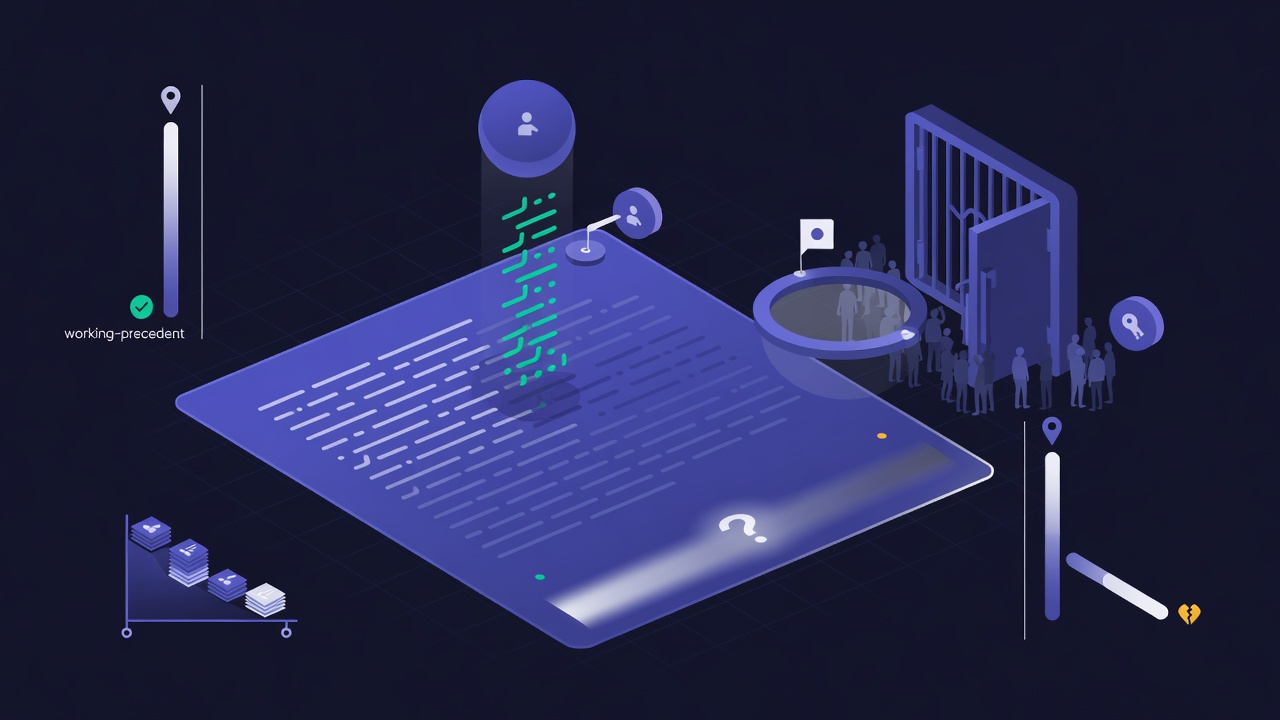
Watermarking text is harder than watermarking an image. There are no pixels to nudge. The signal has to hide in word choice and phrasing without making the writing worse. The standard approach biases the model's token sampling toward a secret pattern that a matching detector can later score, while a reader sees nothing unusual. Google DeepMind published and deployed exactly this with SynthID-Text, which is where most of the "yes, this is feasible" confidence comes from.
Anthropic's version applies the same idea to Claude's output by default. The mark is invisible, it is meant to survive light editing, and it is designed to let a detector answer one question: did this come from Claude? The capability is real. The problem is that Anthropic shipped the capability without shipping the answers to the obvious questions around it.
| Question | SynthID-Text precedent | Anthropic's rollout |
|---|---|---|
| Is the method published? | Yes, with a paper and open tooling | Rolled out ahead of a clear public writeup |
| Who can verify a mark? | Framed around the provider running detection | Left ambiguous, which is the loudest complaint |
| Does it degrade quality? | Measured as minimal on the tasks tested | Not the sticking point in the debate |
| What counts as AI-authored? | Out of scope for the method itself | Unresolved, and it matters most for real users |
Why the debate is about trust, not feasibility
Arvind Narayanan, who writes as @random_walker, gave the sharpest read. His point was that the technology is fine and has precedent, so the failure is a communications and trust failure. When a company adds an invisible mark to your writing, the reasonable next questions are: who can check for it, what does a positive result actually claim, and can I turn it off. Anthropic did not answer those up front, and in a trust-sensitive area, silence gets read as the worst-case answer.
Verifier transparency is the core of it. If only Anthropic can run the detector, then "was this written by Claude?" becomes a question one company gets to answer about your work, with no way for you to audit the call. That is a very different product than an open detector anyone can run. The rollout never made clear which one this is, and that gap is where the reaction came from.
The "market for lemons" problem
Samuel Fitoussi pushed the argument past provenance mechanics into economics. He framed mixed human and AI text as a market for lemons: once buyers cannot tell human writing from machine writing, they discount all of it, and the honest sellers lose first. Provenance marks are supposed to fix that by making the difference legible again. The catch is that a mark only helps if people trust what it certifies and who certifies it, which loops straight back to the verifier question.
Dan Breunig and others in the thread pushed on the softer cost. Mandatory invisible provenance marks can quietly change writing norms and authorship expectations. If everything you produce with an assistant carries a hidden "made with Claude" tag, the tool stops being neutral scaffolding and starts being a label on your work. For a lot of writers that is a meaningful shift in what using the tool means.
Where does editing end and authoring begin
The hardest question in the whole discussion, and the one Narayanan flagged as unresolved, is the gray zone. If Claude drafts a paragraph and you keep it, that is clearly AI-authored. If Claude fixes your grammar and tightens two sentences you wrote, that is closer to a spell-checker. Between those poles sits most real work, where a human and a model trade edits until nobody can cleanly say who wrote what. A watermark that fires the same way across that whole range tells a reader far less than the positive result implies.
This is not a corner case. It is how most people actually use these tools, which is exactly why leaving it undefined is a product problem and not a philosophy seminar. A provenance signal that cannot distinguish "AI wrote this" from "AI touched this" will get treated as the stronger claim, and that misfire lands on the user.
Video: how Claude's text watermark works
For a plain walkthrough of the sampling trick behind text watermarking and what a detector is actually scoring, this breakdown covers the mechanics:
Why it matters if you write with Claude
For anyone using Claude to produce content, three things follow. Your default output may now carry a signal you did not add and cannot inspect. Whether that signal can be checked by anyone besides Anthropic is still unclear. And a detector cannot yet tell the difference between prose Claude wrote and prose you wrote with Claude's help, so a positive result will overclaim against you before it protects you.
None of that makes watermarking a bad idea. Provenance in a flooded content market is a real problem worth solving, and the underlying method holds up. It does mean the useful version of this ships with published detection, clear rules for who can verify, and an honest account of what a mark does and does not prove. Until then the safe assumption is that anything you generate with Claude may be attributable back to it.
FAQ
Can I see or remove the watermark in Claude's text?
The mark is invisible by design and meant to survive light editing, and Anthropic has not shipped a user-facing switch or inspector for it. Heavy rewriting weakens any statistical watermark, but there is no documented opt-out today.
Is text watermarking even reliable?
The method is real and has a production precedent in Google DeepMind's SynthID-Text. Reliability drops as text gets shorter or more heavily rewritten, and it cannot separate fully AI-written prose from lightly AI-edited prose, which is the gap researchers are most worried about.
Does this apply to other AI writing tools?
Google has shipped text watermarking through SynthID, and the pressure to add provenance is industry-wide, so expect more assistants to follow. If provenance is a concern for your workflow, compare how each tool handles it before you commit. See our best AI aggregator guide for a way to switch between models without locking into one provider's policy.
Sources
- @random_walker - text watermarking is feasible, but Anthropic's rollout failed on communication and verifier transparency
- @random_walker - the unresolved gray area between AI-assisted editing and AI-authored prose
- @SamuelFitouss10 - framing mixed human and AI text as a market for lemons
- @dbreunig - on how mandatory provenance marks change writing norms
- @suchenzang - user-autonomy commentary on invisible provenance
Further reading
Try all the models mentioned in this article
Admix gives you GPT-5, Claude, Gemini, and 350+ AI models in one app. Compare responses side by side. Free to start.
Start free on Admix