Four Gemini Agents Beat Minecraft's Ender Dragon With No Human Help
Quick verdict
Four Gemini 4 Argon agents played Minecraft from a fresh world and beat it, killing the Ender Dragon in 27 hours and 14 minutes with no human stepping in. Along the way they wrote 2,783 programs, died 605 times, and coordinated through a shared chat and a shared memory. The run cost about $520 at list API prices. This is not a product you can buy, and it changes nothing about your subscription today. It matters because finishing Minecraft is one of the hardest long-horizon tests there is: thousands of steps, hard dependencies, and constant recovery from failure. An AI that can grind through that for a day without a human is the same shape of problem as an AI that can run a real coding task end to end.
What actually happened
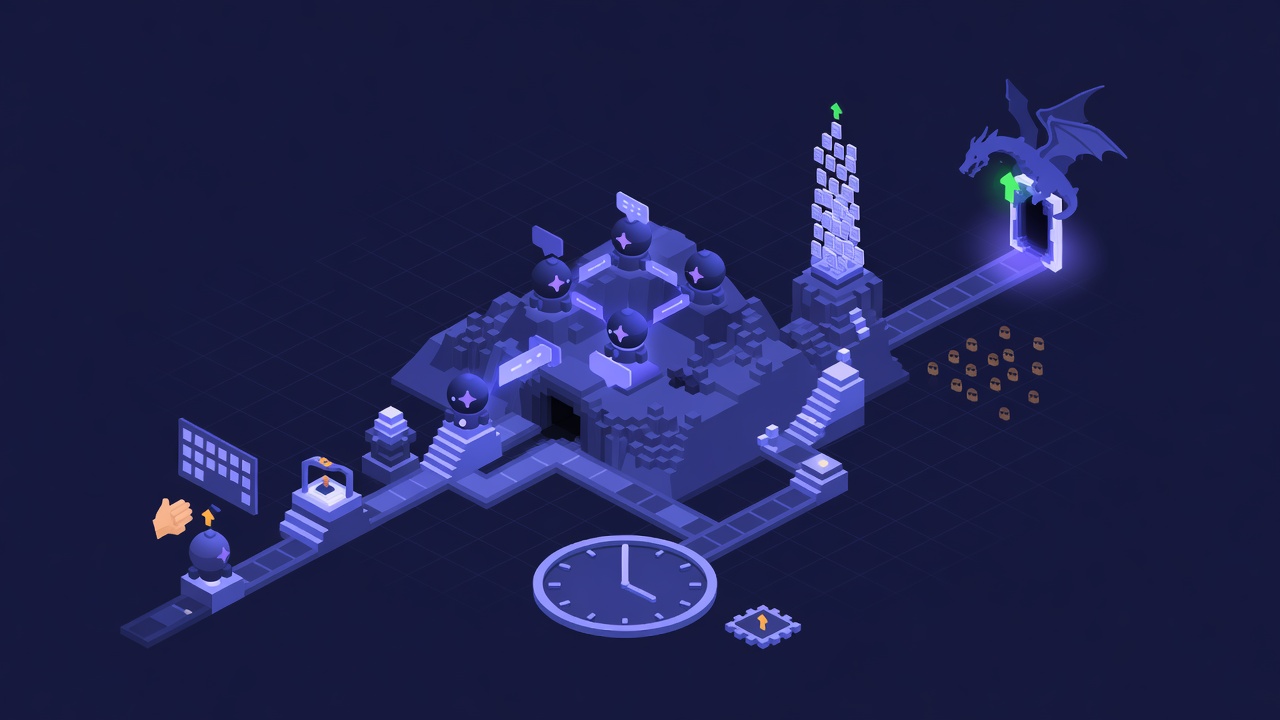
Google DeepMind's setup put four agents in one Minecraft world and told them to reach the end of the game, which means mining, crafting better tools, finding a stronghold, lighting the end portal, and killing the Ender Dragon. The team's own post reports they did it in 27h14m with no human help. The agents did not see the screen the way you do. They received the world as numeric state rather than pixels, then wrote and ran code to act on it.
The raw counts tell the story better than any headline. Across the run the agents authored 2,783 programs and died 605 times, learning what killed them and routing around it. They talked to each other over a chat channel and kept a shared memory so one agent's discovery did not get lost when another took over a task. The paper writeup frames the win as a study in coordination and recovery, not a single clever trick. Nobody told the agents the recipe for an eye of ender. They had to find it, fail, and try again.
The bill is the part worth sitting with. The cost summary puts the whole 27-hour run at roughly $520 at published API prices. That is a lot for a video game and almost nothing for a day of autonomous work, which is exactly the tension every team weighing agents runs into.
Why a game is a real benchmark
It is easy to roll your eyes at an AI beating a game. The reason researchers keep reaching for Minecraft is that most benchmarks are short. A model answers one question or writes one function and you grade it. Minecraft is the opposite. Winning takes a chain of dependent actions where an early mistake quietly ruins a step hours later, and there is no reset button that hands you the right answer. That is the thing current agents are worst at, holding a goal across thousands of steps while the environment keeps surprising them.
The 605 deaths are the signal, not the embarrassment. Each one is a place where a brittle agent would have stalled or looped, and these recovered and kept the larger goal in view. The same ability is what separates a coding agent that files a clean pull request from one that edits three files, breaks the build, and gives up. If you want to see where that gap stands across tools people actually use, our roundup of the best AI coding agents walks through which ones hold a plan and which ones drift.
Video: Gemini agents finish Minecraft
A walkthrough of the run, how the four agents split the work, and what the coordination looked like in practice.
What it means if you pay for AI
Day to day, nothing. You cannot point four Argon agents at your inbox, and the $520 figure is a research cost, not a price list. What the run tells you is where the frontier is heading: agents that run for hours, split a job into parts, and dig themselves out of their own mistakes. That is the exact capability behind the agent features already showing up in coding tools and chat apps, and it is the one worth testing before you trust it with real work.
The cost line is also a quiet argument for not locking yourself into one plan. A long agent run can burn tokens fast, and the model that wins one task is rarely the cheapest at the next. Routing work to the right model per job, and watching what each run actually costs, is the whole point of routing coding work instead of paying one flat subscription. For the same reason, if you want to try Gemini 4 Argon, the model behind this run, without a standalone Google plan, running it through an aggregator lets you compare it against Claude and GPT on your own tasks before you commit.
FAQ
Did the agents really beat Minecraft with no human help?
Yes. Google DeepMind reports the four Gemini 4 Argon agents reached and killed the Ender Dragon in 27 hours and 14 minutes autonomously, writing 2,783 programs and dying 605 times along the way.
How much did the run cost?
About $520 at list API prices for the full 27-hour run. That is a research figure for one experiment, not a product you can buy, so treat it as a sense of scale rather than a quote.
Why does beating a game matter for real work?
Finishing Minecraft is a long-horizon task with thousands of dependent steps and no do-overs, which is the kind of problem agents handle worst. An agent that can grind through it and recover from failure is closer to one that can run a real coding or research job end to end. See how today's tools compare in our best AI models for coding guide.
Sources
- Google DeepMind - four Gemini 4 Argon agents beat Minecraft in 27h14m
- @omarsar0 - paper summary: 2,783 programs, 605 deaths, chat and shared memory
- @ai_database - numeric world state and the ~$520 run cost
Further reading
Try all the models mentioned in this article
Admix gives you GPT-5, Claude, Gemini, and 350+ AI models in one app. Compare responses side by side. Try it for 7 days for $1.99.
Try Admix for $1.99